Premium Comfort Care.

A medium home, reviewed on public record.
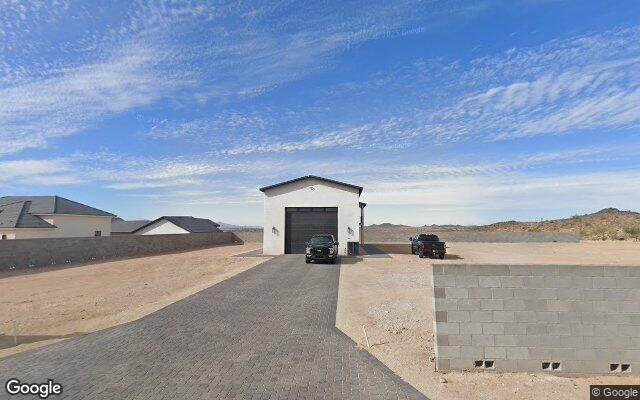
© Google Street View
Compared to 1,661 Arizona facilities with a similar number of beds.
Care · 36-month window. Higher percentile = better performance on inspection record. Source: Arizona Dept. of Health Services · Bureau of Residential Facilities Licensing.
among peers to rank.
Rankings based on 36-month ADHS inspection data. Severity and frequency: fewer citations = higher percentile. Repeat rate: lower repeat citation share = higher percentile.
Citation history, plotted month by month.
9 deficiencies on record. Each bar is a month with a citation.
Finding distribution
9 total · 36 monthsScope × Severity (CMS A–L)
Every inspection visit, verbatim.
3 inspections in the public record, most recent first. Plain-language summaries open first — click into any row for the full citation text.
2025-09-02Annual Compliance VisitR9-10-113.A.2 · 9 findings
“Based on record review, documentation review, and interview, the health care institution failed to implement tuberculosis (TB) infection control activities, including annually providing training and education related to recognizing the signs and symptoms of TB to individuals employed by the health care institution, for one of three personnel records sampled. The deficient practice posed a risk as the caregiver received no organized instruction or information related to TB surveillance. Findings include: 1. A review of E2’s personnel revealed no documentation of annual training related to recognizing the signs and symptoms of TB. Based on E2’s hire date, this documentation was required. 2. A review of the facility's policies and procedures revealed a policy titled “Tuberculosis (“TB”) Testing.” The policy stated, “The facility provides in-service training and education related to recognizing and symptoms of tuberculosis yearly.” 3. In an exit interview, the findings were reviewed with E2, and no additional information was provided.”
“Based on observation, interview, record review, and documentation review, the governing authority failed to ensure a caregiver who was able to read, write, understand, and communicate in English was on the assisted living facility's premises. The deficient practice posed a risk if the caregiver was unable to understand and communicate with residents, others involved in resident care, the Department, and emergency services. Findings include: 1. Upon arrival at the facility, E3 reported E3 did not speak or understand English. E3 went to get E1. 2. During an interview, E1 reported E3 was not good with English. 3. The Compliance Officers (COs) observed E3 working at the facility with seven residents present. 4. During an interview, E3 reported E3 did not speak English and did not understand the COs questions. E3 would have E1 answer the questions. 5. E1 reported E1 worked as an assistant caregiver. 6. A review of E3's personnel record revealed E3 worked as a caregiver. 7. During an environmental inspection, the COs observed the manager designation documentation posted at the front door with E3’s name and signature. 8. A review of the August 2025 personnel work schedule revealed E3 was scheduled for every day in August. 9. In an interview, E2 reported that E3 was E2's manager designee. 10. In an exit interview, the findings were reviewed with E2, and no additional information was provided.”
“Based on documentation review, record review, and interview, the manager failed to ensure employees provided documentation of freedom from infectious tuberculosis (TB) as specified in R9-10-113 for three of three personnel sampled. The deficient practice posed a potential TB exposure risk to residents. Findings include: 1. R9-10-113.A states "If a health care institution is subject to the requirements of this Section, as specified in an Article in this Chapter, the health care institution's chief administrative officer shall ensure that the health care institution establishes, documents, and implements tuberculosis infection control activities that...2. Include: a. For each individual who is employed by the health care institution, provides volunteer services for the health care institution, or is admitted to the health care institution and who is subject to the requirements of this Section, screening, on or before the date specified in the applicable Article of this Chapter, that consists of: i. Assessing risks of prior exposure to infectious tuberculosis, ii. Determining if the individual has signs or symptoms of tuberculosis, and iii. Obtaining documentation of the individual's freedom from infectious tuberculosis according to subsection (B)(1)..." 2. Review of the Centers for Disease Control and Prevention website revealed a web page titled "TB Screening and Testing of Health Care Personnel." The web page stated, "If the Mantoux tuberculin skin test (TST) or Interferon Gamma Release Assay (IGRA) test is used to test health care personnel upon hire (preplacement), two-step testing should be used." 3. A review of the personnel records revealed no record for E1. 4. A review of E2’s personnel revealed documentation of a negative T-spot blood test, however no documentation of a TB risk assessment and a TB signs/symptoms screening. Based on E2’s hire date, this documentation was required. 5. A review of E3’s personnel record revealed documentation of two negative Mantoux skin tests, however no documentation of a TB risk assessment and a TB signs/symptoms screening. Based on E3’s hire date, this documentation was required. 6. A review of the facility's policies and procedures revealed a policy titled “Tuberculosis (“TB”) Testing.” The policy stated, “The TB test/screening must be BOTH administered AND read prior to the individual being accepted as a resident or as an employee, providing services to residents, or moving into the facility. TB test/screening can be administered up to 7 days after admission.” 7. A review of the August 2025 personnel work schedule revealed E2 and E3 were scheduled for every day in August. 8. In an exit interview, the findings were reviewed with E2, and no additional information was provided.”
“Based on observation, interview, and record review, the manager failed to ensure a personnel record was established and maintained for each employee as required. The deficient practice posed a risk as the required information could not be verified for E1. Findings include: 1. Upon arrival at the facility, E3 and E1 were the only employees at the facility. 2. During an interview, E3 reported E3 did not speak or understand English. E3 reported that E1 would assist with questions. 3. During an interview, E1 reported E3 was not good with English and that E1 was covering as E2 was off. 4. A review of the personnel records revealed no record for E1. 5. A review of E3’s personnel records revealed no documentation of the following: -verification that a potential employee is not on the adult protective services -caregiver certification -individual’s qualification, including skills and knowledge applicable to the individual’s job duties 6. A review of the August 2025 personnel work schedule revealed E3 was scheduled for every day in August. E1 was not listed on the work schedule. 7. During an interview, E1 reported E1 was working in the facility for the past four days. 8. In an interview, E2 stated “E1 was covering. E2 did not have time to complete E1’s personnel record and asked E1 to complete E1’s self.” 9. In an exit interview, the findings were reviewed with E2, and no additional information was provided.”
“Based on observation, documentation review, record review, and interview, the manager failed to ensure that a resident was not subjected to restraints for one of seven residents sampled. The deficient practice posed a risk of injury and violated a resident’s rights. Findings include: 1. R9-10-101.202 defines “Restraint” as any physical or chemical method of restricting a patient’s freedom of movement, physical activity, or access to the patient’s own body. 2. During an environmental inspection of the facility, the Compliance Officers (COs) observed R1 lying in bed sleeping with half bedrails in the upright position along the side at the head of the bed and at the foot of the bed. The bed was placed against the wall. 3. The COs observed E1 raise and lower the bedrails similar to R1’s bedrails. The mechanism for raising and lowering the bedrail was accessible from outside the bed. E1 turned the mechanism to loosen the screw. Then E1 grabbed the bedrail with two hands to raise the bedrail. It took E1 some force to raise and lower the rail. 4. A review of the facility’s policies and procedures revealed a policy and procedure titled “Limitations on Level of Service and Use of Restraints.” The policy stated “Staff, Manager, and/or Owner shall ensure bed rails are never used in the facility.” 5. A review of R1’s service plan revealed the following: -R1 was wheelchair bound and not bed-bound -R1 was a one-person assist with walking, standing, and transfers. 6. In an interview, E2 stated, “R1 is not bed-bound and should not have the bedrails up.” 7. In an exit interview, the findings were reviewed with E2, and no additional information was provided.”
“Based on observation, documentation review, and interview, the manager failed to ensure a resident has the right to receive privacy in care of personal needs, correspondence, visitation, and personal affairs. Findings include: 1. During an environmental inspection of the facility, the Compliance Officers observed a television in the kitchen with four different boxes on it. Three of the boxes had a different resident’s room, and the last box had a view of the medication cabinet. 2. A review of R1’s medical record revealed no documentation of consent to be monitored by a camera in R1’s private space. 3. A review of E1’s personnel record revealed a document titled “Facility Use of Camera.” The document stated, “Cameras are not located in resident bedrooms or bathrooms.” 4. A review of the facility's policies and procedures revealed no documentation on monitoring residents in their bedrooms by camera. 5. In an exit interview, the findings were reviewed with E2, and no additional information was provided.”
“Based on observation, record review, documentation review, and interview, the manager failed to ensure a resident’s medical record included an accurate name and signature of the individual administering medication for two of two residents sampled. The deficient practice posed a health and safety risk to residents if the facility did not properly document medication administration for a resident, and the Department was provided false or misleading information. Findings include: 1. During an environmental inspection of the facility, the Compliance Officers (COs) observed E1 open the medication cabinet and take out medication. E1 crushed the medication and placed it in applesauce. E1 fed the applesauce to a resident who was sitting at the dining room table. E1 did not document the administration of the medication. 2. The COs observed the following: -E1 unlocking the computer -E1 accessing residents' records -E1 locking the computer 3. A review of the personnel records revealed no record for E1. 4. A review of R1’s electronic medical record revealed that E3 administered medication at 8:00 am on September 2, 2025. 5. During an interview, E3 reported E3 did not speak or understand English. 6. A review of the August 2025 electronic medication administration records (MARs) revealed that E3 had signed and dated the MARs for 26 of 31 days in August. 7. A review of R1’s August 2025 MAR revealed E3 signed and dated for Levetiracetam 1000mg oral tablet administered twice a day at 8:00 am on 26 of 31 days worked in August. E3 signed and dated for Levetiracetam 1000mg oral tablet administered twice a day at 8:00 pm on 28 of 31 days worked in August. 8. A review of R2’s August 2025 MAR revealed E3 signed and dated for Amlopipine 10mg oral tablet administered once a day at 8:00 am on 26 of 31 days worked in August. E3 signed and dated for Atorvastatin 40mg oral tablet administered at bedtime at 8:00 pm on 28 of 31 days worked in August. 9. The COs observed E3 unable to unlock the computer to access the MARs. E1 told E3 the password to the computer. Once the computer was unlocked, E3 was unable to find the program Synkwise. E3 looked to E1. E1 opened Synkwise for E3. Once Synkwise was open, E3 account was automatically pulled up. E3 did not know how to open a resident's record and document in the MARs. E3 looked to E1 to open the MAR. 10. In an interview, E3 stated, “E3 does not do medication administration.” E3 reported that E3 did not know how to use the computer. 11. In an interview, E1 stated, “Medication administration was previously done by the E2 and a previous caregiver.” 12. A review of E3’s personnel record revealed a document titled “Caregiver Job Description.” The Caregiver Job Description stated “documenting medications taken by the resident on the medication administration record.” The Caregiver Job Description was signed by E2 and E3 and dated on E3's hired date. 13. A review of the facility's policies and procedures revealed a policy titled “Medication Services.” The policy stated, “The caregiver will initial in the MAR for the date and time the medication was given to the resident and the medication taken.” 14. In an interview, E2 stated, “E3 is supposed to be administering medication.” 15. In an exit interview, the findings were reviewed with E2, and no additional information was provided.”
“Based on observation and interview, the manager failed to ensure that food requiring refrigeration was maintained at 41°F or below. The deficient practice posed a risk of potential foodborne illness. Findings include: 1. During an environmental inspection of the facility, the Compliance Officers observed an opened bottle of Wilsey mayonnaise and an opened bottle of Sweet Baby Ray’s barbecue sauce in the pantry in the kitchen. The labels on both bottles stated “Refrigerate after opening.” 2. In an interview, E1 reported that E1 did not realize the bottles needed to be refrigerated. 3. In an exit interview, the findings were reviewed with E2, and no additional information was provided.”
“Based on observation, interview, and documentation review, the manager failed to ensure that toxic materials were stored in a locked area and inaccessible to residents. The deficient practice posed a risk to the physical health and safety of a resident. Findings include: 1. During an environmental inspection of the facility, the Compliance Officers observed the laundry door with no lock. The following were found on the washer and dryer: -Glade air freshener -Lysol Disinfectant Spray -Oxi Clean -Kirkland Laundry Detergent 2. During an environmental inspection of the facility, the Compliance Officers observed Lysol Disinfecting Wipes on a shelf above the toilet. 3. During an environmental inspection of the facility, the Compliance Officers observed a bathroom cabinet in the primary bathroom unlocked. The cabinet had a lock, but it was not latched. The following were observed: -Two bottles of Lysol Disinfecting Wipes -Two bottles of Lysol Disinfectant Spray - Two cans Comet with Bleach 4. A review of the facility’s policies and procedures revealed a policy and procedure titled “Facility Grounds Safe and Free of Hazards.” The policy stated “The facility manager and/or that owner and staff will ensure that all poisonous or toxic materials (this is to include all cleaning supplies) will be stored and maintained in labeled containers in a locked area separated from food preparation and storage, dining areas, and medications.” 5. In an exit interview, the findings were reviewed with E2, and no additional information was provided.”
2024-01-04Annual Compliance VisitNo findings
2023-11-02Annual Compliance VisitNo findings
Other facilities in Peoria.
Other memory care facilities near Peoria with similar care offerings.
Facility Watch · Premium
Family reviews
No reviews yet — be the first to share your experience