Legacy Retirement Residence.

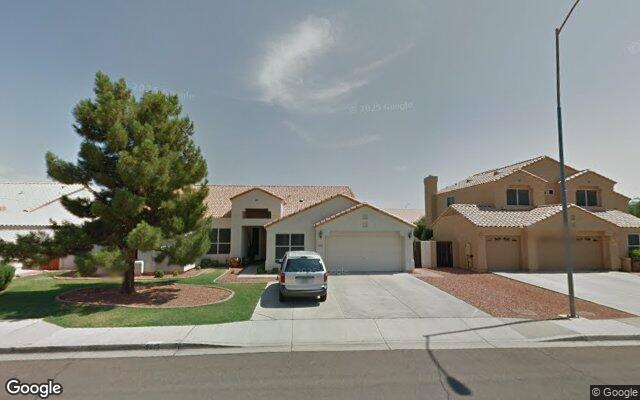
A large home, reviewed on public record.
© Google Street View
Compared to 116 Arizona facilities with a similar number of beds.
Care · 36-month window. Higher percentile = better performance on inspection record. Source: Arizona Dept. of Health Services · Bureau of Residential Facilities Licensing.
among peers to rank.
Rankings based on 36-month ADHS inspection data. Severity and frequency: fewer citations = higher percentile. Repeat rate: lower repeat citation share = higher percentile.
Citation history, plotted month by month.
13 deficiencies on record. Each bar is a month with a citation.
Finding distribution
13 total · 36 monthsScope × Severity (CMS A–L)
Every inspection visit, verbatim.
22 inspections in the public record, most recent first. Plain-language summaries open first — click into any row for the full citation text.
2026-09-04Complaint InvestigationNo findings
2026-08-18Complaint InvestigationNo findings
2026-07-08Complaint InvestigationNo findings
2026-04-28Complaint InvestigationR9-10-820.A.14 · 1 finding
“Based on documentation review, record review, and interview, the manager failed to ensure that a cat allowed in the facility was vaccinated against rabies. The deficient practice posed a risk to the physical health and safety of a resident. Findings Include: 1. A review of facility documentation revealed policies and procedures. The policy titled “Pet Policy” stated, “pets are permitted at Legacy Retirement communities with prior approval from the Executive Director. All shots and vaccinations must be current." 2. A review of O1’s record revealed documentation of rabies vaccination. However, the rabies vaccination expired April 3, 2025. No evidence of current rabies vaccination was available for review. 3. A review of O2’s record revealed documentation of rabies vaccination. However, the rabies vaccination expired February 11, 2024. No evidence of current rabies vaccination was available for review. 4. In an exit interview, the findings were discussed with E1and E2, and no additional information was provided.”
2026-04-17Complaint InvestigationNo findings
2026-01-23Complaint InvestigationNo findings
2026-01-02Complaint InvestigationNo findings
2025-08-27Complaint InvestigationHigh Risk · 1 finding
“Based on documentation review, record review, and interview, after the manager had a reasonable basis, according to A.R.S. § 46-454, to believe abuse, neglect, or exploitation had occurred on the premises, the manager failed to report the suspected abuse, neglect, or exploitation of the resident according to A.R.S. § 46-454. The deficient practice posed a risk as the Department was unable to assess if there was an immediate health and safety concern for residents who resided in the assisted living facility. Findings include: 1. A review of department documentation revealed that an intake on July 3, 2025, reported that “the care staff hit R1 and stated that the care staff needed to defend themselves against R1.” 2. A review of R1’s medical record revealed a charting note dated June 26, 2025. The documentation indicated that the resident was hitting the caregiver, and the resident got a skin tear.” However, no reports indicate whether the facility checked on R1 skin, reported the incident, or conducted an investigation. 3. In an interview, E1 stated that there was no incident report of R1's skin tear or an investigation conducted to find out how R1 got the skin tear. 4. In an interview, E1 acknowledged that E1 failed to comply with requirements of R9-10-803. J by not completing an incident report or investigation.”
2025-07-25Complaint InvestigationNo findings
2025-07-23Complaint InvestigationNo findings
2025-07-08Complaint InvestigationNo findings
2025-06-30Complaint InvestigationNo findings
2025-06-27Other VisitNo findings
2025-04-15Complaint InvestigationHigh Risk · 1 finding
“Based on documentation review and interview, after having a reasonable basis to believe abuse occurred on the premises, the manager failed to report the suspected abuse of a resident according to Arizona Revised Statutes (A.R.S.) § 46-454. The deficient practice posed a risk to the physical health and safety of a resident. Findings include: 1. A.R.S. § 46-454(A) states: "A health professional... or other person who has responsibility for the care of a vulnerable adult and who has a reasonable basis to believe that abuse, neglect or exploitation of the vulnerable adult has occurred shall immediately report or cause reports to be made of such reasonable basis to a peace officer or to the adult protective services central intake unit...The reports required by this subsection shall be made immediately by telephone or online." 2. Arizona Administrative Code R9-10-101(111) states, "'Immediate' means without delay." 3. A review of facility documentation revealed an investigation report of an incident which occurred at approximately 10:30 PM on April 9, 2025. The report revealed the manager had a reasonable basis to believe abuse occurred on the premises. The review further revealed a report made to Adult Protective Services (APS) and a printout of a confirmation email from APS demonstrating facility personnel reported the suspected abuse. However, the email indicated the suspected abuse was not reported to APS until 4:39 PM on April 10, 2025, more than 18 hours after facility personnel were made aware of the incident. 4. In an interview regarding the report to APS, E1 stated, “I know we sent this on Thursday the next day.” After reviewing the email confirmation, E1 confirmed the suspected abuse was not reported to APS until 4:39 PM on April 10, 2025.”
2025-03-31Complaint InvestigationR9-10-806.A.10 · 5 findings
“Based on documentation review, record review, and interview, the manager failed to ensure a caregiver provided current documentation of cardiopulmonary resuscitation (CPR) training certification specific to adults before providing assisted living services to a resident, for one of three sampled caregivers. The deficient practice posed a risk if a caregiver was unable to meet a resident's needs during an emergency. Findings include: 1. A review of facility documentation revealed a policy and procedure (P&P) titled "Cardiopulmonary Resuscitation Training" dated December 14, 2022. The P&P stated: "1. All Direct Care Associates will be trained in cardiopulmonary resuscitation. 2. Training will include a demonstration of direct care associate’s ability to perform cardiopulmonary resuscitation." The review further revealed a personnel schedule dated March 2025. The schedule revealed E2 worked on a regular basis in March 2025. 2. A review of E3's personnel record revealed E3 was hired as caregiver. The review revealed a printout of E3's CPR training certification from NationalCPRFoundation dated as issued on February 11, 2025. However, the review revealed E3 did not have CPR training which included a demonstration of E3's ability to perform CPR. 4. A review of the NationalCPRFoundation website revealed E3's CPR training was online-only and did not include a demonstration of E3's ability to perform CPR. 5. In an interview, E2 stated, “That’s the only one in [E3’s] file.””
“Based on documentation review, record review, and interview, the manager failed to ensure a caregiver's skills and knowledge were verified and documented before the caregiver provided physical health services, for one of three sampled caregivers. The deficient practice posed a risk if a caregiver did not have the skills and knowledge necessary to meet a resident's needs and the Department was provided false or misleading information. Findings include: 1. A review of Department documentation revealed a Plan of Correction (POC) for the complaint and compliance inspection conducted on August 6, 2024. The POC revealed this rule violation was cited during that inspection and was documented as corrected on October 1, 2024. The POC stated: "[W]e initiated a full audit of all caregiver files, including licensed nurses, to ensure that their skills and knowledge records are in compliance with the rules and regulations of AZDHS. This was also completed on August 16, 2024.” The POC continued: “[W]e have audited all necessary associate files to ensure that their skills and knowledge records are in compliance with the rules and regulations of AZDHS.” 2. A review of facility documentation revealed no policy and procedure covering how the manager would verify and document a caregiver or assistant caregiver's skills and knowledge. 3. A review of E4's personnel record revealed E4 was hired as a caregiver in 2023. The review revealed a "Caregiver Skills Training Checklist" which indicated E4's skills and knowledge were not verified and documented until October 4, 2024, after E6 began providing services. The review revealed E4’s skills and knowledge were not verified and documented on August 16, 2024, or October 1, 2024, as reported in the aforementioned POC. 4. In an interview, E2 reported the facility was not using the aforementioned checklist when E4 was hired. E2 confirmed E4’s skills and knowledge were not verified and documented until October 4, 2024, stating, “[E4] will not have an initial skills checklist.” This is a repeat citation from the complaint and compliance inspection conducted on August 6, 2024.”
“Based on documentation review, record review, and interview, the manager failed to ensure an employee provided documentation of freedom from infectious tuberculosis (TB) on or before the date the individual began providing services at or on behalf of the assisted living facility, as specified in R9-10-113, for two of three sampled personnel members. The deficient practice posed a potential TB exposure risk to residents. Findings include: 1. Arizona Administrative Code (A.A.C.) R9-10-113(B)(1)(a)(i) states: "B. A health care institution's chief administrative officer shall: 1. For an individual for whom baseline screening and documentation of freedom from infectious tuberculosis is required by an Article in this Chapter, as specified in subsection (A)(2)(a), obtain one of the following as evidence of freedom from infectious tuberculosis: a. Documentation of a negative Mantoux skin test or other tuberculosis screening test that: i. Is recommended by the U.S. Centers for Disease Control and Prevention (CDC)." 2. A review of the CDC website revealed a web page titled "Baseline Tuberculosis Screening and Testing for Health Care Personnel." The web page stated: "If the Mantoux tuberculin skin test (TST) is used for baseline testing of health care personnel, use two-step testing. Purpose: Two-step testing is recommended for the initial TB skin test for adults who may be tested periodically, such as health care personnel." 3. A review of facility documentation revealed a policy and procedure (P&P) titled “Caregiver Employment Requirements” dated December 1, 2023. The P&P stated: “The Executive Director will ensure that all caregivers hired meet the following criteria. A caregiver at the date of hire: 7. Has current T.B. screening documentation prior to start date.” The review further revealed a personnel schedule dated March 2025. The schedule revealed E2 worked on a regular basis in March 2025. 4. A review of E3's personnel record revealed E3 was hired as a caregiver. The review revealed a document titled “Tuberculosis Skin Testing” which included spaces to document two separate TSTs, listed as “TEST #1” and “TEST #2” respectively. The document revealed an initial TST dated as read approximately two weeks after E3’s date of hire. However, the document and further review revealed no second TST. 5. In an interview, E2 reported E3 had not yet received E3’s second TST. 6. A review of E4’s personnel record revealed E4 was hired as a caregiver in early 2023. The review revealed baseline screening including determining if E4 had signs or symptoms of tuberculosis. However, the baseline screening was completed nearly 20 months after E4’s date of hire. 7. In an interview, E2 reported E4 did not have baseline screening including determining if E4 had signs or symptoms of tuberculosis before E4 started providing services. Technical assistance was provided on this rule during the complaint inspection conducted on March 21, 2024; the complaint inspection conducted on August 2, 2023; the complaint and compliance inspection conducted on February 7-8, 2023; and the complaint inspection conducted on October 6, 2022.”
“Based on Interview and documentation review, the manager failed to ensure a resident was treated with dignity, respect, and consideration. The deficient practice posed a risk to the health and safety of a resident. Findings include: 1. In an interview, E2 reported an incident involving E5 and R3. E2 stated E2 “suspected abuse.” 2. A review of facility documentation revealed an incident report regarding the aforementioned incident. The report stated, “Resident was wondering [sic] into Rooms, Caregiver guided Resident out of North cottage [and] in the process Resident recieved [sic] a skin tear on L forearm.” 3. In an interview, E2 reported having a reason to believe R3 was not treated with dignity, respect, and consideration.”
“Based on documentation review, record review, and interview, the governing authority failed to ensure compliance with Arizona Revised Statutes (A.R.S.) § 36-411(C)(1), for one of three sampled personnel members. The deficient practice posed a risk if the employees were a danger to a vulnerable population. Findings include: 1. A.R.S. § 36-411(C)(1) states: "C. Each residential care institution, nursing care institution and home health agency shall make documented, good faith efforts to: 1. Contact previous employers to obtain information or recommendations that may be relevant to a person's fitness to work in a residential care institution, nursing care institution or home health agency.” 2. A review of facility documentation revealed a policy and procedure (P&P) titled “Caregiver Employment Requirements” dated December 1, 2023. The P&P stated: “The Executive Director will ensure that all caregivers hired meet the following criteria. A caregiver at the date of hire: 4. Provides facility with at least 2 personal and 2 professional references and the facility has documented good faith effort to verify the references.” 3. A review of E3’s personnel record revealed E3 was hired as a caregiver. The review revealed an “Application for Employment” which included previous employment. However, the review revealed no documentation of compliance with A.R.S. § 36-411(C)(1). 4. In an interview, E2 reported the facility did not have documentation of compliance with A.R.S. § 36-411(C)(1) for E3. This is a repeat citation from the complaint and compliance inspection conducted on August 6, 2024.”
2025-02-13Complaint InvestigationNo findings
2024-10-02Complaint InvestigationNo findings
2024-08-19Complaint InvestigationA.A.C. · 1 finding
“Based on record review and interview, the manager failed to ensure a resident had a written service plan to include the correct level of service the resident was expected to receive, for one of three residents reviewed. The deficient practice posed a risk as the service plan did not reinforce and clarify services to be provided to a resident. Findings include: A.R.S. \'a7 36-401.38 defines " Personal care services" to mean assistance with activities of daily living that can be performed by persons without professional skills or professional training and includes the coordination or provision of intermittent nursing services and the administration of medications and treatments by a nurse who is licensed pursuant to title 32, chapter 15 or as otherwise provided by law. A.R.S. \'a7 36-401.38 defines "Directed care services" to mean programs and services, including supervisory and personal care services, that are provided to persons who are incapable of recognizing danger, summoning assistance, expressing need or making basic care decisions. 1. A review of R2's medical record revealed a written service plan, dated July 19, 2024, which indicated R2 received personal care services; however, the service plan stated "Communication Care Needs- Limited ability to communicate needs. Communication Care information- answers questions inappropriately. [...] Decision Making Care Needs- Dependent" and "RESIDENT REQUIRES MEMORY CARE [...]" 2. In an interview, R2 was unable to converse with the Compliance Officers. 3. In an interview, E1 acknowledged R2 required directed care services, and that R2's service plan did not identify R2's correct level of care.”
2024-08-06Complaint InvestigationA.A.C. · 4 findings
“Based on observation, record review, and interview, the manager failed to ensure an assistant caregiver complied with the fingerprinting requirements in A.R.S. \'a7 36-411. Findings Include: 1. During the environmental inspection of the facility, the Compliance Officer observed E3 (hired 2021) working at the facility. 2. A review of E3's personnel record revealed documentation of a fingerprint clearance card. The fingerprint clearance card had expired on October 20, 2023. However, further review of R3's personnel record revealed another fingerprint clearance card issued on March 28, 2024. 3. In an interview, E3 acknowledged the fingerprint clearance card was not valid between October 20, 2023 to March 28, 2024. E3 reported E3 did not renew the fingerprint clearance card due to not having the time or money. E3 reported they work directly with residents at the facility.”
“Based on documentation review, and interview, a manager failed to implement policies and procedures to protect the health and safety of a resident that covered methods by which an assisted living center was aware of the general or specific whereabouts of a resident, based on the level of assisted living services provided to the resident and the assisted living services the assisted living center is authorized to provide. Findings include: 1. A review of facility documentation revealed a policy titled "The Whereabouts of Residents". The policy statement stated, " Resident whereabouts will be monitored through community rounds, meals tracking, activity attendance tracking, and sign in/ out log to minimize potential for elopement while allowing for resident independence and dignity." The policy procedure stated, " ...32. Residents will be required to sign in and out at the front desk when leaving the community for any reason." 2. Review of the "sign in/ out log" showed that R1 and R2 did not sign in or out of the facility. 3. In an interview, E1 and E2 acknowledged R1 and R2 did not sign in or out of the facility.”
“Based on documentation review, record review, and interview, the manager failed to ensure a caregiver or assistant caregiver's skills and knowledge were verified and documented before the caregiver provided physical health services on behalf of the facility, for two of four sampled caregivers and assistant caregivers. The deficient practice posed a risk if employees did not have the skills and knowledge necessary to ensure the health and safety of residents. Findings include: 1. A review of facility documentation staffing schedules revealed staffing schedules for the previous 12 months. The schedules revealed E3 scheduled to work at the facility as an assisted living coordinator / assistant caregiver on multiple shifts throughout September 2023 - August 2024. 2. A review of facility documentation staffing schedules revealed staffing schedules for the previous 12 months. The schedules revealed E5 scheduled to work at the facility as a caregiver on multiple shifts throughout September 2023 - August 2024. 3. A review of E3's and E5's personnel records revealed no documented verification of skills and knowledge. 4. In an interview, E3 acknowledged working with residents providing assisted living services daily. 5. In an interview, E1 acknowledged E3's and E5's personnel records did not contain documented verification of skills and knowledge.”
“Based on record review and interview, the manager failed to ensure a resident provided evidence of freedom from infectious tuberculosis (TB) before or within seven calendar days after the resident's date of occupancy, for one of three sampled residents. The deficient practice posed a potential TB exposure risk to residents. Findings include: 1. A review of R9's medical record revealed documented evidence of freedom from infectious tuberculosis (TB). However, the evidence of freedom from infectious tuberculosis (TB) was dated more than seven calendar days after the resident's date of occupancy. 2. In an interview, E1 acknowledged documented evidence of freedom from infectious TB for R3 was dated more than seven calendar days after the resident's date of occupancy.”
2024-07-10Complaint InvestigationNo findings
2024-03-21Complaint InvestigationNo findings
2024-01-04Complaint InvestigationNo findings
1 older inspection from 2023 are not shown above.
Get the complete record, translated into plain language — emailed to you.
Other facilities in Mesa.
Other memory care facilities near Mesa with similar care offerings.
Full Inspection Record
Family reviews
No reviews yet — be the first to share your experience