Home Sweet Home.
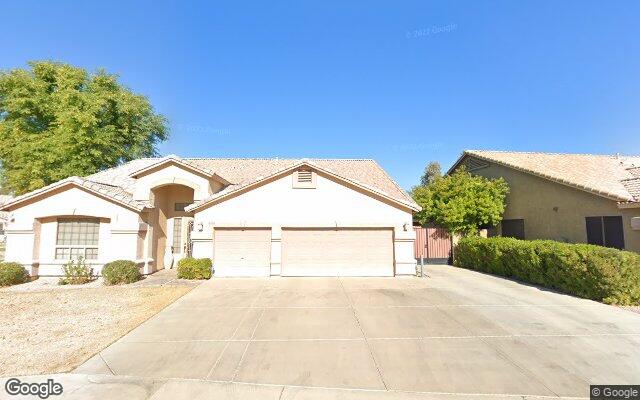
A small home, reviewed on public record.
© Google Street View
Compared to 1,661 Arizona facilities with a similar number of beds.
Care · 36-month window. Higher percentile = better performance on inspection record. Source: Arizona Dept. of Health Services · Bureau of Residential Facilities Licensing.
among peers to rank.
on file.
Rankings based on 36-month ADHS inspection data. Severity and frequency: fewer citations = higher percentile. Repeat rate: lower repeat citation share = higher percentile.
Citation history, plotted month by month.
24 deficiencies on record. Each bar is a month with a citation.
Finding distribution
24 total · 36 monthsScope × Severity (CMS A–L)
Every inspection visit, verbatim.
2 inspections in the public record, most recent first. Plain-language summaries open first — click into any row for the full citation text.
2025-08-11Complaint InvestigationNo findings
2025-02-19Complaint InvestigationA.A.C. · 24 findings
“Based on documentation review, record review, and interview, the health care institution failed to ensure the health care institution developed and administered a training program for all staff regarding fall prevention and fall recovery that included initial training and continued competency training for two of three personnel sampled. The deficient practice posed a health and safety risk for residents. Findings include: A review of the facility's policies and procedures did not include documentation of an established training program for all staff regarding fall prevention and fall recovery. A review of E2’s personnel record did not include documentation of completed initial training on fall prevention and fall recovery. Based on E2's date of hire, this documentation was required. A review of E3’s personnel record did not include documentation of completed initial training on fall prevention and fall recovery. Based on E3's date of hire, this documentation was required. In an interview, E1 acknowledged the facility failed to develop and administer a training program for all staff regarding fall prevention and fall recovery that included initial and continued competency training. This is a repeat deficiency from the compliance inspection conducted on August 8, 2023.”
“Based on documentation review, observation, record review, and interview, the governing authority failed to ensure compliance with A.R.S. § 36-411, for three of three personnel sampled. The deficient practice posed a risk if E1, E2 and E3 were a danger to a vulnerable population. Findings include: A.R.S. § 36-411(C)(2) states, "Each residential care institution, nursing care institution and home health agency shall make documented, good faith efforts to: 1. Contact previous employers to obtain information or recommendations that may be relevant to a person’s fitness to work in a residential care institution, nursing care institution or home health agency. 2. Verify the current status of a person’s fingerprint clearance card." While on-site for the compliance and complaint inspection, the Compliance officer observed E3 at the facility, providing services to residents. A review of E1's and E2’s personnel records revealed documentation of valid fingerprint clearance cards (FPCC). However, the status of E1's and E2's cards were not verified. A review of E2's personnel record did not include documentation of the facility's good faith effort to contact E2's previous employers. While on-site for the compliance and complaint inspection, the Compliance Officer requested E3's personnel record with all required documents at approximately 2:15 PM. However, documentation regarding E3's FPCC or reference checks was not provided. In an interview, E1 acknowledged that the governing authority failed to ensure compliance with A.R.S. § 36-411(C)(2).”
“Based on record review and interview, the manager failed to ensure that medication administered to a resident was administered in compliance with a medication order and documented in the resident's medical record, for one of two residents sampled. The deficient practice posed a risk if the resident experienced a change in condition due to improper administration of medication. The deficient practice posed a risk as medication could not be verified as administered against a medication order. Findings include: A review of R1's medical record revealed a medication order, dated October 17, 2024, for Propranolol HCL 60 milligrams (mg),1 tablet by mouth (po) daily (qd) hold for blood pressure <100 and heart rate < 60. A review of R1's medication administration record (MAR) for February 2025 revealed documentation of R1's heart rate and blood pressure on February 2, 2025 and February 7, 2025. However, with the exception of the aforementioned days, R1's medical record did not include documentation of R1's vitals to determine whether R1 should be administered Propranolol HCL 60 mg 1 tablet po, February 1, 2025 - present. A review of R1's medical record revealed an order, dated October 17, 2024, for Seroquel 25 mg, 0.5 tablet po qd. A review of R1's MAR, for February 2025, revealed documentation of administration of Seroquel 25 mg, 0.5 tablet administered at 7:00 PM on February 19, 2025. However, the MAR was provided for review at approximately 2:15 PM. In an interview, E1 acknowledged medication administered to R1 was not administered in compliance with a medication order and accurately documented in R1's medical record.”
“Based on observation and interview, the manager failed to ensure that medication stored by the facility was stored in a separate locked room, closet, cabinet, or self-contained unit used only for medication storage. The deficient practice posed a risk to residents who were unable to self-administer medications. Findings include: During an environmental tour of the facility, the Compliance Officer observed the following medications stored in an unlocked medicine cabinet in an unlocked bathroom: Maxitrol Eye Drops; and Hydrocortisone 1% Cream. The Compliance Officer also observed the following medications stored in the door of an unlocked facility refrigerator: Bromphen-PSE-DM 2-30-10 Milligrams (mg) / 5 milliliters (mL); Ibuprofen 100 mg/5 mL; and Senna 8.6 mg. The Compliance Officer also observed Lorazepam 2 mg/mL stored in an unlocked zipper pouch in the facility's refrigerator. In an interview, E1 acknowledged medication stored by the facility was not stored in a separate locked room, closet, cabinet, or self-contained unit used only for medication storage. This is a repeat deficiency from the compliance inspection conducted on August 9, 2023.”
“Based on record review and interview, the health care institution's chief administrative officer failed to ensure training and education related to recognizing the signs and symptoms of tuberculosis (TB) was provided annually to individuals employed by the health care institution, for three of three personnel sampled. The deficient practice posed a potential illness risk to residents. Findings include: A review of E1's personnel record did not include documentation of completed training on recognizing the signs and symptoms of TB. Given E1's date of hire, this documentation was required. A review of E2's personnel record did not include documentation of completed training on recognizing the signs and symptoms of TB. Given E2's date of hire, this documentation was required. A review of E3's personnel record did not include documentation of completed training on recognizing the signs and symptoms of TB. Given E3's date of hire, this documentation was required. In an interview, E1 acknowledged E1's, E2's, and E3's personnel records did not include documentation of initial and annual training on recognizing the signs and symptoms of TB.”
“Based on documentation review and interview, the manager failed to ensure that policies and procedures were reviewed at least once every three years and updated as needed. The deficient practice posed a risk as policies and procedures reinforce and clarify standards expected of employees. Findings include: A review of the facility's policy and procedure manual revealed a review was conducted on April 10, 2020. However, documentation of an additional review was not available. In an interview, E1 acknowledged that the policies and procedures were not reviewed at least once every three years and updated as needed.”
“Based on documentation review, observation, record review, and interview, the manager failed to ensure that a caregiver provided documentation of completion of a caregiver training program approved by the Department of the Board of Examiners for Nursing Care Institution Administrators and Assisted Living Facility Managers (NCIA), for two of three personnel sampled. The deficient practice posed a risk if the individuals were not qualified to provide the required services. Findings include: A review of the facility's personnel schedule for February 2025 revealed E2 was scheduled to work and provide services at the facility 7:00 AM -7:00 PM February 1, 2025 - February 28, 2025. While on-site for the compliance and complaint inspection, the Compliance Officer observed E3 at the facility, providing services to residents. A review of E2's personnel record did not include documentation of a completed caregiver training program approved by the Department or the NCIA Board. A review of the NCIA Board website did not reveal a completed caregiver training program for E2 or E3. In an interview, E1 reported being unaware E2 did not possess a valid caregiver training certificate. In an interview, E3 reported E3 was a certified caregiver. In an interview, E1 acknowledged E2 and E3 did not provide documentation of completion of a caregiver training program approved by the Department or the NCIA Board.”
“Based on documentation review, record review, and interview, the manager failed to ensure that an assistant caregiver interacted with residents under the supervision of a manager or caregiver, for one of three personnel sampled. The deficient practice posed a risk as the Department was provided false or misleading information. Findings include: A review of the facility's personnel schedule, for February 2025, revealed E2 was scheduled to work at the facility from 7:00 AM - 7:00 PM February 1, 2025 - February 28, 2025. A review of E2's personnel record revealed documentation of a "Arizona Direct Care Worker Training" certificate. However, R2's personnel record did not include documentation of a completed a caregiver training program. In an interview, E1 reported E2 was left at the facility independently while E1 picked up E1's family members from school. However, E1 then reported E2 was not left alone at the facility when E2's certificate was identified as not valid. E1 acknowledged E2 interacted with residents not under the supervision of a manager or caregiver.”
“Based on documentation review, observation, record review, and interview, the manager failed to ensure that a caregiver's skills and knowledge were verified and documented before the caregiver provided health services for two of three personnel sampled. The deficient practice posed a risk if a personnel member was unable to meet a resident's needs. Findings include: A review of the facility's employee schedule for February 2025 revealed E2 was scheduled to work at the facility from February 1, 2025, to February 28, 2025. While on-site for the compliance and complaint inspection, the Compliance Officer observed E3 at the facility, providing services to residents. A review of E2's and E3's personnel records did not include documentation of the verification of E2's and E3's skills and knowledge. In an interview, E1 reported E3 was a friend of E1 and recently starting providing services at the facility. E1 acknowledged verification of skills and knowledge was not documented in E2's and E2's personnel records before E2 and E3 provided health services.”
“Based on documentation review, observation and interview, the manager failed to ensure documentation was maintained of the caregivers and assistance caregivers working each day, including the hours worked by each. The deficient practice posed a risk as there was no documentation to identify the staff that was present each day to ensure the health and safety of residents. Findings Include: A review of the facility's personnel schedule, for February 2025, revealed E1 and E2 were scheduled to work 7:00 AM - 7:00 PM February 1, 2025 - February 28, 2025. However, the schedule did not reveal an employee scheduled to work at the facility overnight. While on-site for the compliance and complaint inspection, the Compliance Officer observed E3 at the facility, providing services to residents. However, E3 was not on the personnel schedule for February 19, 2025. In an interview, E1 acknowledged the employee work schedule did not include documentation of the caregivers who worked each day, and the hours worked by each.”
“Based on documentation review, observation, record review, and interview, the manager failed to ensure that a caregiver received orientation that was specific to the duties to be performed by the caregiver before providing assisted services to a resident, for two of three personnel sampled. The deficient practice posed a risk if the employees were unable to meet residents’ needs. Findings include: A review of the facility's personnel schedule for February 2025 revealed E2 was scheduled to work from 7:00 AM - 7:00 PM February 1, 2025 - February 28, 2025. While on-site for the compliance and complaint inspection, the Compliance Officer observed E3 at the facility, interacting with residents. A review of E2's personnel record did not include documentation of a completed orientation before E2 began providing services at the facility. The Compliance Officer requested E3's personnel record with all required documents at approximately 2:15 PM. However, documentation of E3's completed orientation was not available. In an interview, E1 acknowledged E2 and E3 did not receive orientation that was specific to the duties to be performed by E2 and E3 before providing assisted services to a resident.”
“Based on observation, record review, and interview, the manager failed to ensure that a personnel record for each employee was maintained throughout the individual's period of providing services in or for the assisted living facility, for one of three personnel sampled. The deficient practice posed a risk as required information could not be verified for E3. Findings include: While on-site for the compliance and complaint inspection, the Compliance Officer observed E3 at the facility providing services to residents. The Compliance Officer requested E3's personnel record with all required documents at approximately 2:15 PM. However, E3's personnel record was not available for review. In an interview, E1 reported E3 was a friend of E3 and recently began providing services at the facility. E1 acknowledged E3's personnel record was not maintained throughout the period of E3 providing services in the facility.”
“Based on documentation review, record review, and interview, the manager failed to ensure that a resident provided evidence of freedom from infectious tuberculosis (TB) as specified in R9-10-113, for one of two residents sampled. The deficient practice posed a potential illness risk to residents. Findings include: 1. R9-10-113.A states, "If a health care institution is subject to the requirements of this Section, as specified in an Article in this Chapter, the health care institution's chief administrative officer shall ensure that the health care institution establishes, documents, and implements tuberculosis infection control activities that...2. Include: a. For each individual who is employed by the health care institution, provides volunteer services for the health care institution, or is admitted to the health care institution and who is subject to the requirements of this Section, screening, on or before the date specified in the applicable Article of this Chapter, that consists of: i. Assessing risks of prior exposure to infectious tuberculosis, ii. Determining if the individual has signs or symptoms of tuberculosis, and iii. Obtaining documentation of the individual's freedom from infectious tuberculosis according to subsection (B)(1)..." A review of R2's (admitted 2024) medical record revealed a chest x-ray. However, R2's medical record did not include additional documentation of evidence of freedom from infectious TB for Compliance Officer review. In an interview, E1 acknowledged R2's medical record did not contain documentation of the resident's freedom from infectious tuberculosis as specified in R9-10-113. This is a repeat deficiency from the compliance inspection conducted on August 9, 2023.”
“Based on documentation review, record review, and interview, the manager failed to ensure that within five working days after a resident's acceptance by the assisted living facility, the documented agreement required in subsection (D), was signed by the resident's representative, the resident's legal guardian, or another individual who has been designated by the individual under A.R.S. § 36-3221 to make health care decisions on the individual's behalf, for two of two residents sampled. The deficient practice posed a risk if the resident, the resident's representative, the resident's legal guardian, or another individual designated by the individual under A.R.S. § 36-3221 was not informed of the terms of residency. Findings include: R9-10-807.D states, "Before or at the time of an individual’s acceptance by an assisted living facility, a manager shall ensure that there is a documented residency agreement with the assisted living facility that includes: 1. The individual’s name; 2. Terms of occupancy, including: a. Date of occupancy or expected date of occupancy, b. Resident responsibilities, and c. Responsibilities of the assisted living facility; 3. A list of the services to be provided by the assisted living facility to the resident; 4. A list of the services available from the assisted living facility at an additional fee or charge; 5. For an assisted living home, whether the manager or a caregiver is awake during nighttime hours; 6. The policy for refunding fees, charges, or deposits; 7. The policy and procedure for a resident to terminate residency, including terminating residency because services were not provided to the resident according to the resident’s service plan; 8. The policy and procedure for an assisted living facility to terminate residency; 9. The complaint process; and 10. The manager’s signature and date signed." A review of R1's and R2's medical records revealed R1 and R2 received directed care services A review of R1's medical record revealed a residency agreement with all required elements, signed by R1. However, the agreement was not signed by the resident's representative, the resident's legal guardian, or another individual designated by the individual under A.R.S. § 36-3221. Based on R1's date of acceptance and level of care, this documentation was required. A review of R2's medical record revealed a residency agreement with all required elements, signed by R2. However, the agreement was not signed by the resident's representative, the resident's legal guardian, or another individual designated by the individual under A.R.S. § 36-3221. Based on R2's date of acceptance and level of care, this documentation was required. In an interview, E1 acknowledged R1's and R2's medical records did not include a residency agreement signed by the resident's representative, the resident's legal guardian, or another individual who has been designated by the individual under A.R.S. § 36-3221, within five days of R1's and R2's acceptance into the facility.”
“Based on record review and interview, the manager failed to ensure that a resident had a written service plan that when initially developed was signed and dated by the resident's representative, for one of two residents sampled. The deficient practice posed a risk if the service plan was not developed to articulate decisions and agreements. Findings include: A review of R2's medical record revealed R2 received directed care services. A review of R2's service plan, dated January 29, 2025, revealed a signature by R2. However, the service plan was not signed by R2's representative. In an interview, E1 acknowledged R2's service plan was not signed and dated by the resident's representative.”
“Based on record review and interview, the manager failed to ensure that a resident's medical record contained a medication order from a medical practitioner for each medication that was administered to the resident, for two of two residents sampled. The deficient practice posed a risk as medication administered could not be verified against a medication order. Findings include: A review of R1's medical record did not include a medication order for Quetiapine 50 milligrams (mg), 1 tablet by mouth (po) daily (qd) at bedtime (qhs). A review of R1's medication administration record (MAR) for February 2025, revealed R1 was administered Quetiapine 50 mg, 1 tablet po qd qhs at 7:00 PM February 1, 2025 - present. A review of R2's medical record revealed medication orders, signed by a registered nurse (RN) on February 1, 2025 and February 7, 2025, for the following medications: Doxycycline 100 mg, 1 tablet po twice a day (bid) for 7 days; Prednisone 20 mg, 2 tablets po qd for 5 days; and Promethazine Codeine 5 milliliters (mL) po every 4 hours (q4h) as needed (PRN). However, the orders were not signed by a medical practitioner as required. A review of R2's MAR for February 2025, revealed R2 was administered the following medications: Doxycycline 100 mg, and indicated 1 tablet was administered po at 8:00 AM and 6:00 PM February 1, 2025 - February 7, 2025; Prednisone 20 mg, and indicated 1 tablet was administered po at 8:00 AM February 1, 2025 - February 5, 2025; and Promethazine Codeine 5 mL, and indicated 5 mL was administered po at 8:00 AM, 12:00 PM, 4:00 PM, and 8:00 PM February 8, 2025 - February 14, 2025. In an interview, E1 acknowledged R1's and R2's medical records did not include a medication order from a medical practitioner for each medication that was administered to R1 and R2.”
“Based on documentation review, record review and interview, the manager failed to ensure that a resident's medical record contained documentation of the resident's notification of the availability of vaccination for influenza (flu) and pneumonia, according to A.R.S. § 36-406(1)(d), for one of two residents sampled. The deficient practice posed a potential illness risk to residents. Findings include: A.R.S. § 36-406(1)(d) states, "The department shall: Require as a condition of licensure that nursing care institutions and assisted living facilities make vaccinations for influenza and pneumonia available to residents on site on a yearly basis. The department shall prescribe the manner by which the institutions and facilities shall document compliance with this subdivision, including documenting residents who refuse to be immunized. The department shall not impose a violation on a license for not making a vaccination available if there is a shortage of that vaccination in this state as determined by the director." A review of R1's medical record revealed R1 received the flu vaccine January 24, 2024 and the pneumonia vaccine June 17, 2019. However, documentation of additional offerings were not available for review. Based on R1's acceptance date, this documentation was required. In an interview, E1 acknowledged R1's medical record did not contain documentation of R1's notification of the availability of vaccinations according to A.R.S. § 36-406(1)(d).”
“Based on record review, observation, and interview, the manager failed to ensure that there was a means of exiting the facility that controlled or alerted employees of the egress of a resident from the facility. The deficient practice posed a risk if the facility was unaware of the general or specific whereabouts of a resident. Findings include: A review of R1's and R2's medical records revealed R1 and R2 received directed care services. During an environmental tour of the facility, the Compliance Officer observed the front door and sliding back door to the patio were equipped with an alarm to alert employees of egress; however, the alarms were not turned on at the time of the inspection. In an interview, E1 acknowledged that the facility provided directed care services and did not contain a way to control or alert employees of the egress of a resident from the facility on all exits.”
“Based on documentation review and interview, the manager failed to ensure that a current drug reference guide was available for use by personnel members. Findings include: A review of the facility's drug reference guide revealed a publishing year of 2012. However, documentation of a current drug reference guide was not available for review. In an interview, E1 acknowledged a current drug reference guide was not available for use by personnel members.”
“Based on documentation review and interview, the manager failed to ensure that a current toxicology reference guide was available for use by personnel members. Findings include: A review of the facility's toxicology reference guide revealed a publishing year of 2014. However, documentation of a current toxicology reference guide was not available for review. In an interview, E1 acknowledged a current toxicology reference guide was not available for use by personnel members.”
“Based on documentation review and interview, the manager failed to ensure that a disaster drill for employees was conducted on each shift at least once every three months and documented. The deficient practice posed a risk if employees were unable to implement a disaster plan. Findings include: A review of the facility's disaster drill documentation revealed documentation of drills on the following dates: December 1, 2024; September 1, 2024; June 1, 2024; and March 1, 2024. However, the drills were all conducted during the 7: 00 AM - 7:00 PM shift. In an interview, E1 reported the facility operated two staff shifts, 7:00 AM - 7:00 PM and 7:00 PM - 7:00 AM. E1 acknowledged a disaster drill was not conducted on each shift at least once every three months and documented.”
“Based on documentation review, observation, and interview, the manager failed to ensure that a smoke detector was tested once a month. The deficient practice posed a health and safety risk to the residents. Findings include: While on-site for the compliance and complaint inspection, the Compliance Officer requested the facility's smoke detector testing documentation at approximately 2:15 PM. However, documentation of the facility's tests were not available for review. In an interview, E1 reported the facility tested the smoke detectors about every two months. E1 acknowledged the facility's smoke detectors were not tested at least once a month and documented”
“Based on observation and interview, the manager failed to ensure that the premises and equipment used at the assisted living facility were free from a condition or situation that may cause a resident or other individual to suffer physical injury. The deficient practice poses a health and safety risk to residents. Findings include: During an environmental tour of the facility, the Compliance Officer observed the facility's hosed wrapped up under the legs of a chair, and draped across the sidewalk in the shaded backyard area. The Compliance Officer observed the following materials stacked on top of the facility's shed: Brooms; Rakes; Bolt Cutters; Gardening Tools; A Weed Wacker; and A Shovel. However, the tools were not secured to the roof, and were easily accessible to residents or other individuals. The Compliance Officer observed the facility's lawn mower stored on the side of the facility's shed, easily accessible to residents. The Compliance Officer observed a precariously stacked pile of the following materials next to the facility's back door: Multiple vacuums; Welcome Mats; A trash can; Toilet plungers; A walker; and A full toolbox. In an interview, E1 reported the facility had hired a company to clean up the backyard, however, the clean up had not happened by the time of the inspection. E1 acknowledged the premises and equipment used at the facility were not free from a condition or situation that may cause a resident or other individual to suffer physical injury.”
“Based on observation and interview, the manager failed to ensure that combustible or flammable liquids and hazardous materials stored by the assisted living facility were stored in a locked area inaccessible to residents. The deficient practice posed a risk to the physical health and safety of a resident. Findings include: While on-site for the compliance and complaint inspection, the Compliance Officer observed R1 and R3 to be able to walk independently around the facility. During an environmental tour of the facility, the Compliance Officer observed three propane containers stored in the facility's shaded backyard area. The Compliance Officer also observed two unbranded paint containers stored on the side of the facility's backyard. In an interview, E1 reported the facility had hired a company to clean up the backyard, however, the clean up had not happened by the time of the inspection. E1 acknowledged that combustible or flammable liquids and hazardous materials stored by the facility were stored in a locked area inaccessible to residents.”
1 older inspection from 2023 are not shown above.
Get the complete record, translated into plain language — emailed to you.
Other facilities in Mesa.
Other memory care facilities near Mesa with similar care offerings.
Facility Watch · Premium
Family reviews
No reviews yet — be the first to share your experience