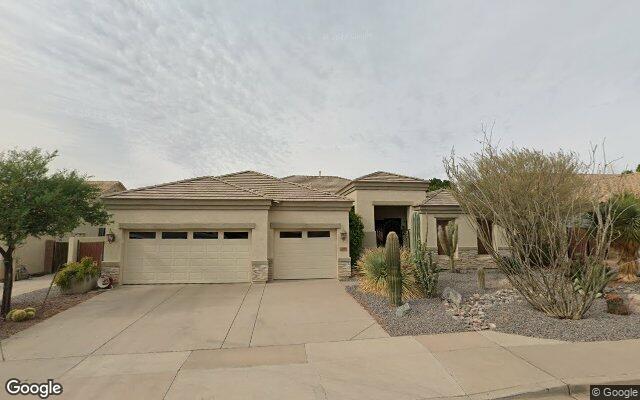
Emerald Groves South.

A medium home, reviewed on public record.
© Google Street View
Compared to 1,661 Arizona facilities with a similar number of beds.
Care · 36-month window. Higher percentile = better performance on inspection record. Source: Arizona Dept. of Health Services · Bureau of Residential Facilities Licensing.
among peers to rank.
Rankings based on 36-month ADHS inspection data. Severity and frequency: fewer citations = higher percentile. Repeat rate: lower repeat citation share = higher percentile.
Citation history, plotted month by month.
16 deficiencies on record. Each bar is a month with a citation.
Finding distribution
16 total · 36 monthsScope × Severity (CMS A–L)
Every inspection visit, verbatim.
3 inspections in the public record, most recent first. Plain-language summaries open first — click into any row for the full citation text.
2025-03-11Annual Compliance VisitA.A.C. · 8 findings
“36-420.01. Health care institutions; fall prevention and fall recovery; training programs; definition A. Each health care institution shall develop and administer a training program for all staff regarding fall prevention and fall recovery. The training program shall include initial training and continued competency training in fall prevention and fall recovery. A health care institution may use information and training materials from the department's Arizona falls prevention coalition in developing the training program.”
“C. A manager shall ensure that a personnel record for each employee or volunteer: 1. Includes: c. Documentation of: i. The individual's qualifications, including skills and knowledge applicable to the individual's job duties;”
“C. A manager shall ensure that a personnel record for each employee or volunteer: 1. Includes: c. Documentation of: iii. The individual's completed orientation and in-service education required by policies and procedures;”
“C. A manager shall ensure that a personnel record for each employee or volunteer: 1. Includes: c. Documentation of: ix. Documentation of compliance with the requirements in A.R.S. § 36-411(A) and (C);”
“B. For a resident receiving respite care services, a manager shall ensure that: 1. A written service plan is: a. Based on a determination of the resident's current needs and: i. Is completed no later than three working days after the resident's date of acceptance; or ii. If the resident has a service plan in the resident's medical record that was developed within the previous 12 months, is reviewed and updated based on changes in the requirements in subsections (A)(3)(a) through (f) within three working days after the resident's date of acceptance; and”
“B. A manager of an assisted living facility authorized to provide personal care services may accept or retain a resident who is confined to a bed or chair because of an inability to ambulate even with assistance if: 2. The following requirements are met at the onset of the condition or when the resident is accepted by the assisted living facility: b. The resident's primary care provider or other medical practitioner: i. Examines the resident at the onset of the condition, or within 30 calendar days before acceptance, and at least once every six months throughout the duration of the resident's condition; ii. Reviews the assisted living facility's scope of services; and iii. Signs and dates a determination stating that the resident's needs can be met by the assisted living facility within the assisted living facility's scope of services and, for retention of a resident, are being met by the assisted living facility;”
“B. If an assisted living facility provides medication administration, a manager shall ensure that: 3. A medication administered to a resident: c. Is documented in the resident's medical record.”
“R9-10-113. Tuberculosis Screening A. If a health care institution is subject to the requirements of this Section, as specified in an Article in this Chapter, the health care institution's chief administrative officer shall ensure that the health care institution establishes, documents, and implements tuberculosis infection control activities that: 2. Include: c. Annually providing training and education related to recognizing the signs and symptoms of tuberculosis to individuals employed by or providing volunteer services for the health care institution;”
2024-12-20Complaint InvestigationNo findings
2024-12-10Annual Compliance VisitA.A.C. · 8 findings
“Based on documentation review, record review, and interview, the manager failed to ensure all staff were administered fall prevention and fall recovery training for two of four personnel reviewed. The deficient practice posed a risk to the physical health and safety of a resident. Findings include: 1. A.R.S. \'a7 36-420.01(A) states "Each health care institution shall develop and administer a training program for all staff regarding fall prevention and fall recovery. The training program shall include initial training and continued competency training in fall prevention and fall recovery. A health care institution may use information and training materials from the department's Arizona falls prevention coalition in developing the training program." 2. A review of facility documentation revealed the facility had implemented a Fall Prevention and Fall Recovery Training program. A specific policy was not available for review but ongoing documentation of the training, which included the dates of the training, the staff who attended, and the specific training materials, was available for review. 3. A review of facility documentation revealed a policy titled "Continuing Education for Staff and Volunteers," which stated, "Attendance of the staff in such ongoing education shall be recorded and will be included in said employee's file." 4. A review of E1's personnel record revealed no documentation of annual fall prevention and fall recovery training was available for review. 5. A review of E4's personnel record revealed E4 was a maintenance worker and was recently hired on October 28, 2024. However, no documentation of initial fall prevention and fall recovery training was available for review. 6. In an interview, E2 and E5 reported E1 had attended and completed annual fall prevention and fall recovery training but had not signed the attendance sheet for that particular facility. E2 explained that E1 manages another facility and has personnel records there as well. During the time the Compliance Officers were on-site, no documentation of E1 completing annual fall prevention and fall recovery training was available for review. E2 and E5 reported they did not know that E4 was required to have fall prevention and fall recovery training since E4 only provided maintenance services. E2 and E5 acknowledged documentation of annual fall prevention and fall recovery training for E1 was not available for review at the time of the inspection, and acknowledged that E4 had not completed initial fall prevention and fall recovery training.”
“Based on record review, documentation review, and interview, the manager failed to ensure that a personnel record for each employee or volunteer included documentation of the individual's qualifications, including skills and knowledge applicable to the individual's job duties, for one of four employees sampled. The deficient practice posed a risk as required information could not be verified for E4. Findings include: 1. During the on-site compliance inspection, the Compliance Officers requested to review E4's personnel record. E2 reported E4 was new to this assisted living home and did not have a personnel record on-site. E2 made a telephone request to another assisted facility home to have E4's personnel record faxed over. 2. Upon receipt of the faxed records, a review of E4's personnel record revealed no documentation of skills and knowledge applicable to E4's job duties. 3. A review of facility documentation revealed a policy titled "Personnel Records." The policy stated, "Upon hiring, the personnel record has been initiated by Manager/Acting Manager. Calls will be made to previous employers for the purpose of verifying professed skills and knowledge. Competency shall be confirmed by successful orientation to the job." 4. Further review of facility documentation revealed a policy titled "Orientation of New Employees." The policy stated, "As determined by the manager, with consideration to previous experience, Day One of employment shall start the process of orientation. The new employee will...be introduced to the rigors of the job and concurrently be counseled in regards to completion of the packet. Competency shall be verified and documented.... All paperwork shall be maintained in the Employee File." 5. In an interview, E2 and E5 acknowledged E4's personnel record did not include verification of skills and knowledge applicable to E4's job duties.”
“Based on record review, documentation review, and interview, the manager failed to ensure that a personnel record for each employee or volunteer included documentation of the individual's completed orientation required by policies and procedures for one of four employees sampled. The deficient practice posed a risk as the employee received no organized instruction or information related to physical health services provided to residents. Findings include: 1. During the on-site compliance inspection, the Compliance Officers requested to review E4's personnel record. E2 reported E4 was new to this assisted living home and did not have a personnel record on-site. E2 made a telephone request to another assisted facility home to have E4's personnel record faxed over. 2. Upon receipt of the faxed records, a review of E4's personnel record revealed no documentation of orientation applicable to E4's job duties. 3. A review of facility documentation revealed a policy titled "Orientation of New Employees." The purpose of the policy was to "present the process by which a new staff member is introduced to the physical facility; the residents, their health issues and their needs; the required compliance with Residents' rights, confidentiality; ...on going staff education." The policy stated, "[the] process of orientation is accomplished by the review and completion of the Employee Packet, as determined and overseen by Manager or Manager Designee. ...Day One of employment shall start the process of orientation. The new employee will...be introduced to the rigors of the job and concurrently be counseled in regards to completion of the packet. ...All paperwork shall be maintained in the Employee File." The policy made specific reference to rule R9-10-806.C.1.c.iii, which addressed each employee or volunteer. 4. In an interview, E2 and E5 acknowledged E4's personnel record did not include documentation of E4's completed orientation.”
“Based on documentation review, record review, and interview, the manager failed to ensure that a personnel record for each employee or volunteer included documentation of compliance with the requirements in A.R.S. \'a7 36-411(C) for one of four employees sampled. The deficient practice posed a risk as required information was not included in E4's personnel record. Findings include: 1. A.R.S. \'a7 36-411(C) states, "Each residential care institution, nursing care institution and home health agency shall make documented, good faith efforts to...verify the current status of a person's fingerprint clearance card." 2. During the on-site compliance inspection, the Compliance Officers requested to review E4's personnel record. E2 reported E4 was new to this assisted living home and did not have a personnel record on-site. E2 made a telephone request to another assisted facility home to have E4's personnel record faxed over. 3. Upon receipt of the faxed records, a review of E4's personnel record revealed a copy of E4's fingerprint clearance card; however, there was no documentation of verification of the card. 4. In an interview, E2 and E5 acknowledged E4's personnel record did not include documentation of verification of E4's fingerprint clearance card.”
“Based on record review, documentation review, and interview, for a resident receiving respite care services, the manager failed to ensure that a written service plan was completed no later than three working days after the resident's date of acceptance. The deficient practice posed a risk as there was no service plan to direct services to be provided to a resident. Findings include: 1. A review of R1's medical record revealed a "Manager's Admitting Assessment" form, which indicated R1 was accepted as a respite resident. 2. Further review of R1's medical record revealed no documentation of a service plan. Based on R1's date of acceptance, a service plan was required. 3. A review of facility documentation revealed a policy titled "Provision of Respite Care." Regarding the admission of a resident for respite care, the policy stated the facility would "Complete a Service Plan within three working days that addresses current health issues and the goals of the respite period." 4. In an interview, E2 acknowledged the manager failed to complete a written service plan for R1 no later than three working days after R1's date of acceptance.”
“Based on interview, observation, and record review, the manager failed to ensure the facility did not retain a resident who was confined to a bed or chair because of an inability to ambulate even with assistance, unless the facility obtained a written determination from a medical practitioner, every six months, stating the resident's needs were met by the facility and the resident's needs were within the facility's scope of services, for one of one resident reviewed who was confined to a bed or chair. The deficient practice posed a risk if the facility was unable to meet a resident's needs. Findings include: 1. In an interview, E2 reported that R2 received personal care services and was non-ambulatory. 2. During a tour of the facility, the Compliance Officers observed R2 sitting in a chair in R2's room. 3. In an interview, R2 told the Compliance Officers that R2 cannot ambulate due to R2's diagnosis. R2 reported R2 spends most of R2's time confined to the chair, which R2 stated was acceptable and necessary due to R2's condition. 4. A review of R2's medical record revealed a document signed by R2's Primary Care Provider (PCP) and dated February 8, 2024, titled "Residency Determination." The document indicated that R2's needs could be met by the facility and were in the facility's Scope of Services. Further, the document indicated that R2's admission or continuation of residency was approved for the following condition: "Mobility is evaluated to be Non-Ambulatory." Under the statement which read, "Continuing approval from PCP is required every six months," were blank signature lines for future determinations for the PCP to sign off. A blank signature line dated "8/24," revealed no signature from a PCP. The document had a handwritten note on the side stating, "New Dr." 5. A review of R2's medical record revealed a current service plan which indicated R2 was non-ambulatory and required the assistance of a caregiver and the use of a hoyer lift to transfer. 6. In an interview, E2 reported R2's PCP had not signed the Residency Determination document when it was due in August 2024. E2 reported R2 had a new doctor and was scheduled to be seen by the doctor tomorrow, at which point E2 would ensure the continuation of residency documentation would be completed. E2 acknowledged the facility failed to obtain written determination from a PCP every six months, stating R2's needs were met by the facility and within the facility's scope of services.”
“Based on record review, documentation review, and interview, the manager failed to ensure that a medication administered to a resident was documented in the resident's medical record for two of three residents sampled. The deficient practice posed a risk as medication could not be verified as administered against a medication order. Findings include: 1. A review of R2's and R3's medical record revealed R2 and R3 received medication administration. 2. A review of R2's medical record revealed a signed medication list that included the following medications: - Carbidopa-Levodopa 25-250 milligrams (mg), 1 tablet (tab) by mouth (PO) 4 times a day (QID); - Divalproex Dr Sprinkle 125 mg, 1 capsule (cap) PO twice a day (BID); and - Gabapentin 800 mg, 1 tab PO QID. 3. A review of R2's medical record revealed a medication administration record (MAR) for December 2024. According to the MAR, the following medications were not documented as administered on December 9, 2024: - Carbidopa-Levodopa 25-250 mg, 1 tab PO QID; - Divalproex Dr Sprinkle 125 mg, 1 cap PO BID; and - Gabapentin 800 mg, 1 tab PO QID. 4. A review of R3's medical record revealed a signed medication list that included the following medication: - Trazodone 50 mg, 1/2 tab PO BID. 5. A review of R3's medical record revealed a MAR for December 2024. According to the MAR, the following medication was not documented as administered on December 4, 2024 at 5:00 PM: - Trazodone 50 mg, 1/2 tab PO BID. 6. A review of facility documentation revealed a policy titled "Documenting Medication Administration." The policy stated, "Medication administration requires unwavering attention to following the 5 Rights: Right Resident; Right Drug; Right Dose/Amount; Right Route; Right Time. Only competent staff who can abide by the required attention-to-detail will be entrusted with this serious responsibility. Manager/Designee will make the appropriate staff assignment. ...Documentation shall also be: Clear; Concise; and Timely...." 7. In an interview, E2 reported R2 and R3 were both administered all of the medications as ordered. E2 also reported the deficient practice for R2 and R3 was performed by the same caregiver and E2 would appropriately address the matter. E2 acknowledged the manager failed to ensure that medications administered to R2 and R3 were properly documented on the respective MAR's.”
“Based on record review, documentation review, and interview, the health care institution's chief administrative officer failed to ensure training and education related to recognizing the signs and symptoms of tuberculosis (TB) was provided annually to individuals employed by the health care institution for one of four personnel sampled. The deficient practice posed a potential illness risk to residents. Findings include: 1. A review of E1's personnel record revealed no documentation of completed annual training on recognizing the signs and symptoms of TB. Based on E1's date of hire, this documentation was required. 2. A review of facility documentation revealed a sign in sheet for a "Mandatory Annual Staff Meeting" for December 2023, which included annual training on recognizing the signs and symptoms of TB. However, E1's name was not on the sign in sheet. 3. In an interview, E2 and E5 reported E1 had attended and completed the annual training on recognizing the signs and symptoms of TB but had not signed the attendance sheet for that particular facility. E2 explained that E1 manages another facility and has personnel records there as well. During the time the Compliance Officers were on-site, no documentation of E1 completing annual training on recognizing the signs and symptoms of TB was available for review. E2 and E5 acknowledged documentation of annual training on recognizing the signs and symptoms of TB for E1 was not available for review at the time of the inspection.”
Other facilities in Mesa.
Other memory care facilities near Mesa with similar care offerings.

Tour Prep
Family reviews
No reviews yet — be the first to share your experience