Vienna Care Home.
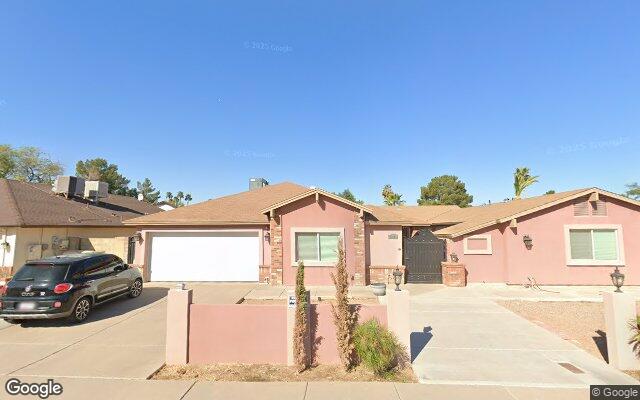
A medium home, reviewed on public record.
© Google Street View
Compared to 1,661 Arizona facilities with a similar number of beds.
Care · 36-month window. Higher percentile = better performance on inspection record. Source: Arizona Dept. of Health Services · Bureau of Residential Facilities Licensing.
among peers to rank.
Rankings based on 36-month ADHS inspection data. Severity and frequency: fewer citations = higher percentile. Repeat rate: lower repeat citation share = higher percentile.
Citation history, plotted month by month.
8 deficiencies on record. Each bar is a month with a citation.
Finding distribution
8 total · 36 monthsScope × Severity (CMS A–L)
Every inspection visit, verbatim.
4 inspections in the public record, most recent first. Plain-language summaries open first — click into any row for the full citation text.
2026-07-23Annual Compliance VisitNo findings
2026-02-27Complaint InvestigationR9-10-808.C.1.g · 3 findings
“Based on documentation review, record review, and interview, the manager failed to ensure that a caregiver documented the services provided in the resident's medical record. The Department was provided with false and misleading information. Findings include: 1. A review of the facility's policies and procedures revealed a document titled "Resident Medical Records (including electronic records) and Documentation", which stated: "....2. Documentation will be dated, legible, authenticated and only use abbreviations approved for this facility. 3. Documentation will be completed by the caregiver or personnel completing the task, providing the service or assisting the resident. No other individuals including the resident's family are allowed to make entries or changes in the resident records. No person is to document care or services provided by another individual. a. An entry in a resident's medical record is allowed only if recorded by an individual authorized by a physician, or by individuals providing direct care to the resident; b. Documentation for another individual is grounds for discipline up to and including termination of employment. 4. Care or services provided to residents are to be documented as they are provided as much as possible...." 2. A record review of R1's medical record revealed a service plan that shows various services, including eating, nighttime checks (every 3-4 hours), and bathing (twice a week). A review of R1's activities of daily living for February 2026 showed the following: February 27th (day of inspection): Lunch and Dinner were documented as provided. February 1st - 26th: no documentation of night checks. February 9th -14th: no documentation of the second bath. 3. A record review of R2's medical record revealed a service plan that showed various services, including eating (requiring assistance three times daily), toileting (requiring total care daily as needed), nighttime (checks every 3-4 hours), and bathing (twice a week). A review of R2's activities of daily living for February 2026 showed the following: February 27th (day of inspection): Dinner was documented as provided. February 2nd, 4th-26th: no documentation of Incontinence Care February 1st - 26th: no documentation of night checks. February 10th - 26th: no documentation of bathing 5. A record review of R3's medical record revealed a service plan that shows various services, including nighttime checks (every 3-4 hours) and bathing (twice a week). A review of R3's activities of daily living for February 2026 showed the following: February 1st - 26th: no documentation of night checks. February 16th - 22nd: No documentation of the second bath. 6. In an interview, E1 reported that caregivers did fill out activities of daily living (ADL) early for lunch and dinner the day of the inspection. E1 also reported that caregivers did not have time to document services in the resident's ADL. 7. In an interview, the findings were reviewed with E1, and no additional documentation or information was provided.”
“Based on record review and interview, the manager failed to ensure that policies and procedures for memory care service were established, documented, and implemented to cover promotion of nutrition and hydration care. Findings include: 1. A review of the facilities' policies and procedures revealed no documentation of memory care policies regarding nutrition and hydration. 2. In an interview, E1 reported that memory care policies and procedures should have been included. 3. In an exit interview, the findings were reviewed with E1, and no additional documentation or information was provided.”
“Based on documentation review, record review, and interview, the manager failed to ensure that medication administered to residents was administered in compliance with medication orders and documented in the residents' medical records. The Department was provided with false and misleading information. Findings include: 1. A review of the facilities' policies and procedures revealed a section titled "Medications Including Opioids and Narcotics", which stated the following: "...The designated and authorized individual will document the self-administration of medication or the assistance in the self-administration of medication in the administration record form (MAR) at the time of the administration or assistance with self-medication administration by having their name, signature and initials entered into the document. Medication will only be administered to the resident as prescribed." "...Assistance with the self-administration of medication or medication administration provided to a resident is in compliance with an order, and is documented in the resident's medical record. Medication administration is not documented until the resident is seen taking them. Medications are administered to one resident at a time." 2. A review of R1's medical records revealed the current service plan with a section titled "Medication Administration", which stated, Resident requires total care with medication administration, Doctor's delegation to caregivers to administer medication, and Medications Administered following Doctor's Orders. Further review revealed medication orders with various medications, such as: Gabapentin 200mg 1 cap PO TID Hydroxizne 25mg 1 T PO TID Docusate sod 100mg 1 T PO QHS Elliquis 5mg 1 t PO BID 3. A review of R1's medication administration record (MAR) for February 27th, 2026, revealed that the time medication was administered was falsified. Below are the medications and times documented in the MAR. Further review also revealed no documentation of wound care between February 1st and 26th: Gabapentin: 12pm Hydroxizne: 12pm and 8pm Docusate: 8pm Elliquis: 8 pm 4. A review of R2's medical records revealed the current service plan with a section titled "Medication Administration", which stated, Resident requires total care with medication administration, Doctor's delegation to caregivers to administer medication, and Medications Administered following Doctor's Orders. Further review revealed medication orders with various medications, such as: Atorvastatin 40mg 1 T PO QHS Phenytion sod 100mg 1 Cap PO TID Trazodone 50mg 1 T PO QHS Metoprolol 25mg 1 T PO QHS Tamsulosin 0.4mg 1 T PO QHS. 5. A review of R2's medication administration record for February 27th, 2026, revealed that the time medication was administered was falsified. Below are the medications and times documented in the MAR. Atorvastatin: 8pm Phenytion: 2pm and 8pm Trazodone: 8pm Metoprolol: 8pm Tamsulosin: 8pm 6. A review of R3's medical records revealed the current service plan with a section titled "Medication Administration", which stated, Resident receives staff assistance in the self-administration of medication, Doctor's delegation to caregivers to administer medication, and Medications Administered following Doctor's Orders. Further review revealed medication orders with various medications, such as: Humulin R-Kwik pen inject 40U TID with meals Melatonin 2.5mg 1 T PO QHS Memantine 5mg 1 T PO BID Metoprolol 25mg 1/2 T PO BID Tamsulosin 0.4mg 1 T PO QHS Doxycycline 100mg 1 Cap PO BID 7. A review of R3's medication administration record for February 27th, 2026, revealed that the time medication was administered was falsified. Below are the medications and times documented in the MAR. Humulin R-Kwik pen: 12pm and 5pm Melatonin: 8pm Memantine: 8pm Metoprolol: 8pm Tamsulosin: 8pm Doxycycline: 8pm 8. In an interview, E1 reported that the MAR was filled out early because caregivers did not have time. 9. In an exit interview, the findings were reviewed with E1, and no additional documentation or information was provided.”
2025-07-21Annual Compliance VisitA.A.C. · 5 findings
“Based on record review and interview, the manager failed to ensure that a written document was available for first responders that included: reason for request on behalf of the resident, a list of medications, current pharmacy, medical history, advanced directives, HIPAA release, primary care physician, patient representative, and facility contact. The deficient practice posed a risk if safety measures were not in place to meet a resident's needs. Findings include: 1. A review of R1's and R2's medical records, revealed no prefilled first responders sheet readily available. 2. In an interview, E1 revealed that no residents had prefilled first responders forms. 3. E1 acknowledged a written document was not available for first responders for R1 and R2.”
“Based on record review, documentation review and interview, the manager failed to ensure compliance with A.R.S. § 36-411 C.3. The deficient practice posed a risk if E1, E2, and E3 were a danger to a vulnerable population. Findings include: 1. A review of the personnel records for E1, E2, and E3, revealed no Adult Protective Services (APS) Central Registry check available for review. 2. A documentation review by the Compliance Officer of the Department’s website, AZ Care Check https://azcarecheck.azdhs.gov/s/ revealed that E1, E2 and E3, were not on the APS Central registry. 3. In an interview, E1 acknowledged the facility was not in compliance with A.R.S. § 36-411.”
“Based on record review and interview, the manager failed to ensure that an employee provided documentation of freedom from infectious Tuberculosis (TB) as specified in R9-10-113, for one of three sampled employees. The deficient practice posed a potential TB exposure risk to residents. Findings include: 1. R9-10-113.A states "If a health care institution is subject to the requirements of this Section, as specified in an Article in this Chapter, the health care institution's chief administrative officer shall ensure that the health care institution establishes, documents, and implements tuberculosis infection control activities that...2. Include: a. For each individual who is employed by the health care institution, provides volunteer services for the health care institution, or is admitted to the health care institution and who is subject to the requirements of this Section, screening, on or before the date specified in the applicable Article of this Chapter, that consists of: i. Assessing risks of prior exposure to infectious tuberculosis, ii. Determining if the individual has signs or symptoms of tuberculosis, and iii. Obtaining documentation of the individual's freedom from infectious tuberculosis according to subsection (B)(1)..." 2. Review of the Centers for Disease Control and Prevention website revealed a web page titled "TB Screening and Testing of Health Care Personnel." The web page stated, "If the Mantoux tuberculin skin test (TST) is used to test health care personnel upon hire (preplacement), two-step testing should be used." 3. A review of E2’s personnel record revealed a negative TB skin test that was less than 12 months old, however no additional documentation of freedom from infectious TB was available for review. 4. In an interview, E1 acknowledged E2 did not provided documentation of freedom from infectious Tuberculosis (TB) as specified in R9-10-113.”
“Based on observation and interview the manager failed to ensure that food was obtained, prepared, served, and stored with potentially hazardous food being refrigerated at a temperature maintained at 41° F or below. The deficient practice posed a risk for potential food borne illnesses. Findings include: 1. During the environmental inspection, the Compliance Officer observed an open carton of eggs and a open container of butter sitting on the countertop in the kitchen. These items remained in that location throughout the two hour inspection. 2. In an interview, E1 acknowledged that potentially hazardous food was not stored in the refrigerator at a temperature maintained at 41° F or below as required.”
“Based on observation and interview, the manager failed to ensure that a first-aid kit was maintained in the assisted living facility in a location accessible to caregivers and assistant caregivers. The deficient practice posed a risk to the health and safety of a resident. Findings include: 1. A review of the facility’s first aid kit revealed it contained Tylenol with an expiration date of April 2024. 2. In an interview, E1 acknowledged that a first-aid kit was not maintained in the assisted living facility in a location accessible to caregivers and assistant caregivers.”
2024-06-03Annual Compliance VisitNo findings
Other facilities in Glendale.
Other memory care facilities near Glendale with similar care offerings.


Full Inspection Record
Family reviews
No reviews yet — be the first to share your experience