Brookdale Arrowhead Ranch.
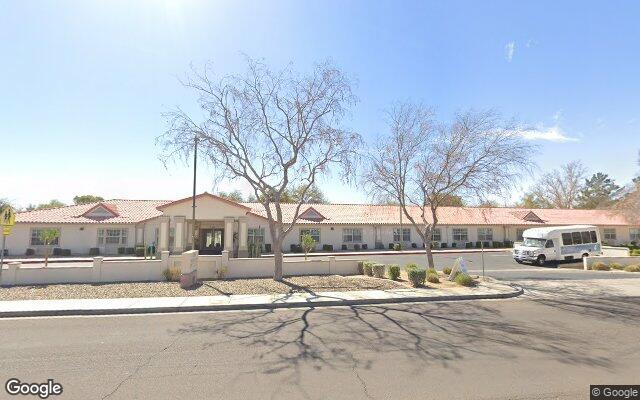
A large home, reviewed on public record.
© Google Street View
Compared to 116 Arizona facilities with a similar number of beds.
Care · 36-month window. Higher percentile = better performance on inspection record. Source: Arizona Dept. of Health Services · Bureau of Residential Facilities Licensing.
among peers to rank.
Rankings based on 36-month ADHS inspection data. Severity and frequency: fewer citations = higher percentile. Repeat rate: lower repeat citation share = higher percentile.
Citation history, plotted month by month.
30 deficiencies on record. Each bar is a month with a citation.
Finding distribution
30 total · 36 monthsScope × Severity (CMS A–L)
Every inspection visit, verbatim.
36 inspections in the public record, most recent first. Plain-language summaries open first — click into any row for the full citation text.
2026-08-12Complaint InvestigationNo findings
2026-07-29Complaint InvestigationNo findings
2026-06-22Complaint InvestigationNo findings
2026-06-12Complaint InvestigationNo findings
2026-05-07Complaint InvestigationEnforcement · 1 finding
“Based on documentation review and interview, the manager failed to ensure that if a manager had a reasonable basis, according to A.R.S. § 46-454, to believe abuse had occurred on the premises the manager documented the immediate action to stop the suspected abuse, report of the suspected abuse to a peace officer or to the adult protective services central intake unit, and initiate an investigation of the suspected abuse that included the time, and actions taken by the manager to prevent the suspected abuse from occurring in the future. The deficient practice posed a risk as the Department was unable to assess if there was an immediate health and safety concern for residents who resided in the assisted living facility. Findings include: 1. A.R.S. § 46-454. stated, "Duty to report abuse, neglect and exploitation of vulnerable adults; duty to make medical records available; violation; classification A. A health professional...or other person who has responsibility for the care of a vulnerable adult and who has a reasonable basis to believe that abuse, neglect or exploitation of the adult has occurred shall immediately report or cause reports to be made of such reasonable basis to a peace officer or to the adult protective services central intake unit...All of the above reports shall be made immediately by telephone or online. B. If an individual listed in subsection A of this section is an employee or agent of a health care institution as defined in section 36-401 and the health care institution's procedures require that all suspected abuse, neglect and exploitation be reported to adult protective services as required by law, the individual is deemed to have complied with the requirements of subsection A of this section by reporting or causing a report to be made to the health care institution in accordance with the health care institution's procedures." 2. R9-10-101.111 stated "Immediate" means without delay. 3. A review of facility documentation revealed a document dated April 29, 2026. This document stated "Type of Incident: Alleged Abuse" and "caregiver in memory care went into residents' room and [R1] was on the floor and [R2] had [R2's] hands on [R1's] hair. They were arguing over some clothes...No injuries. Reported to APS...Caregiver discussed with [R1's] [family] about moving [R1] to a different room..." However, documentation was not available showing the immediate action to stop the suspected abuse. Additionally, the investigation report did not include the time of the abuse, and the actions taken by the manager to prevent the suspected abuse from occurring in the future. 4. A review of facility documentation revealed E1 submitted a "communication" to Adult Protective Services (APS) on May 1, 2026, at 8:11 PM. 5. In an interview, E1 reported the facility did not contact APS until May 1, 2026, two days after the incident. 6. In an exit interview, the findings were reviewed with E1 and no additional information was provided. 7. This is a repeat deficiency from the inspection conducted on March 11, 2026.”
2026-03-11Complaint InvestigationEnforcement · 8 findings
“Based on interview and documentation review, the manager of an assisted living center failed to maintain a copy of the document provided to the emergency responder (EMS). The deficient practice posed a risk as the designated standards were not followed. Findings include: 1. In an interview, E1 reported facility personnel contacted EMS on behalf of R1 on December 5, 2025. 2. A review of facility documentation revealed a document titled “AZ Emergency Packet/Cover Sheet.” The document listed the items provided to EMS for R1 on December 5, 2025. However, the review revealed no copy of the documentation provided to EMS. 3. In an interview, when the Compliance Officer asked if the facility had a copy of the documentation provided to EMS for R1 on December 5, 2025, E1 stated, “No.” E1 reported that the facility used the aforementioned form as a type of receipt of what documentation was provided to EMS. 4. In the exit interview, the Compliance Officer reviewed the findings and E1 and E2 and neither offered further comment. Technical assistance was provided on this rule during the complaint inspection conducted on November 12, 2024.”
“Based on documentation review, interview, and record review, the governing authority failed to ensure compliance with Arizona Revised Statutes (A.R.S.) § 36-411(C)(1) and (3), for three of five sampled employees. The deficient practice posed a risk as an employee was a documented danger to a vulnerable population. Findings include: 1. A.R.S. § 36-411(C)(1) and (3) states: "C. Each residential care institution, nursing care institution and home health agency shall make documented, good faith efforts to: 1. Contact previous employers to obtain information or recommendations that may be relevant to a person's fitness to work in a residential care institution, nursing care institution or home health agency [and] 3. Beginning January 1, 2025, verify that a potential employee is not on the adult protective services registry pursuant to section 46-459.” 2. A review of facility documentation revealed an email from E1 dated May 19, 2025. The email stated, “My name is [E1] I want to notify you that I will be hanging my license at Brookdale Arrowhead Ranch.” 3. In a series of interviews, E1 reported E1 transferred to this facility in May 2026 from another Brookdale location under the same parent company. E1 then reported E1 did not start working at this facility until June 2026. E4 confirmed, reporting E1’s first day in person at this facility was June 9, 2026. 4. A review of E1's personnel record revealed E1 was hired as the manager on May 25, 2025. The review revealed an “Application For Employment” which indicated E1 had previous employers. However, the review revealed no documentation demonstrating a facility representative contacted E1’s previous employers. 5. In an interview, when the Compliance Officer asked if a representative of this contacted E1’s previous employers, E1 reported a corporate recruiter contacted E1’s previous employers when E1 started working for the parent company at another Brookdale location in 2023. 6. In a telephonic interview, E5 reported a representative of Brookdale’s parent company contacted E1’s previous employers before starting at the other Brookdale location, but not when E1 transferred to this facility. E5 reported E5 would provide what documentation E5 could regarding contacting E1’s previous employers. 7. An email from E5 revealed four documents titled “REFERENCE CHECK” dated between January 12, 2023, and January 16, 2023, and not when E1 started at this facility. The documents further revealed the individuals contacted were previous co-workers and not previous employers. 8. A review of facility documentation revealed personnel schedules which indicated E10 worked on October 7-10, 16-17, and 20, 2025, and E11 worked on May 13-18 and 20, 2025. 9. A review of E10’s personnel record revealed E10 was hired as a caregiver on October 7, 2025. The review revealed documentation of previous employment as well as three documents titled “REFERENCE CHECK” dated between September 30, 2025, and October 2, 2025. However, the documents revealed a facility representative contacted E10’s previous co-workers and not E10’s previous employers. The review further revealed a printout from the Adult Protective Services (APS) registry website. However, the printout revealed a facility representative did not check the APS registry until October 8, 2025, after E10 was hired and after E10 started working. 10. A review of E11’s personnel record revealed E11 was hired as a caregiver on May 12, 2025. The review revealed documentation of previous employment as well as four documents titled “REFERENCE CHECK.” However, the review revealed a facility representative did not contact E11’s previous employers until May 23, 2025, after E11 started working. 11. In the exit interview, the Compliance Officer reviewed the findings with E1 and E2, and neither offered further comment. Technical assistance was provided on this rule during the complaint and compliance inspection conducted on February 12, 2025.”
“Based on interview and documentation review, after having a reasonable basis to believe abuse, neglect, or exploitation occurred on the premises, the manager failed to document the actions taken by the manager to prevent the suspected abuse, neglect, or exploitation from occurring in the future. The deficient practice posed a risk to the physical health and safety of a resident. Findings include: 1. In an interview R3 reported E8 was verbally abusive to R3. 2. In an interview, when the Compliance Officer asked if E1 had any reason to believe abuse, neglect, or exploitation had occurred on the premises, E1 stated, “No.” However, E1 reported that Adult Protective Services (APS) had been to the facility recently to investigate a report of abuse involving R3 and E8. When the Compliance Officer asked when E1 learned of the suspected abuse from APS, E1 reported that E1 learned of the suspected abuse on March 3, 2026, more than five days before the date of the inspection. When the Compliance Officer requested the investigation report, E1 reported that E5 conducted the investigation and had the report. 3. In a telephonic interview, E5 reported E5 investigated the suspected abuse and would send the report to the Compliance Officer. 4. A review of facility documentation revealed a document titled “Arizona Assisted Living INCIDENT INVESTIGATION” and dated March 5, 2026. The document outlined the details of the suspected abuse and contained a section that stated, “List actions taken to prevent the suspected abuse, neglect, or exploitation from occurring in the future.” However, the section was left blank. The review revealed no documentation of the actions taken by the manager to prevent the suspected abuse, neglect, or exploitation from occurring in the future. 5. In the exit interview, the Compliance Officer reviewed the findings with E1 and E2, and neither offered further comment.”
“Based on documentation review, interview, and record review, the manager failed to ensure a caregiver's skills and knowledge were verified and documented before the individual provided physical health services, for two of four sampled caregivers. The deficient practice posed a risk if a caregiver did not have the skills and knowledge necessary to meet a resident's needs. Findings include: 1. A review of facility documentation revealed a policy and procedure (P&P) titled “Skills & Competency Evaluation Policy” dated September 2025. The P&P stated: “ Upon hire, each associate will receive and sign a job description that will list the expectations of their assigned duties. 2. Upon hire and as needed, the skills sets or competencies will be assessed/evaluated through a variety of methods, including but not limited to: a. Proof of certification, b. Proof of licensure, [and] c. Attendance of required state specific trainings with passing of examinations (if required) [and] 3. The assessment/evaluation may include skills, tasks or competencies identified in the associate’s job description (e.g., bathing, handwashing, ambulation, transfer, etc.).” 2. A review of facility documentation revealed personnel schedules which indicated E10 worked on October 7-10, 16-17, and 20, 2025, and E11 worked on May 13-18 and 20, 2025. The schedule indicated E10 was training on October 7-10 and 16-17, 2025, and E11 was training on May 13-16, 2025. 3. In an interview, E1, E3, and E6 reported newly hired caregivers shadowed experienced caregivers for three to four shifts before working the floor alone. 4. A review of E10’s personnel record revealed E10 was hired as a caregiver on October 7, 2025. However, the review revealed E6 did not verify E10’s skills and knowledge until November 10, 2025, after E10 started working. 5. In an interview, E3 reported E10 started working the floor unsupervised on October 20, 2025. 6. A review of E11’s personnel record revealed E11 was hired as a caregiver on May 12, 2025. However, the review revealed E6 did not verify E11’s skills and knowledge until June 13, 2025, after E11 started working. 7. In an interview, E1 reported that E1 found out E11’s skills and knowledge had not been verified before providing services when E1 first took over as manager. 8. In the exit interview, the Compliance Officer reviewed the findings and E1 and E2, and neither offered further comment.”
“Based on documentation review, interview, and record review, the manager failed to ensure that a manager and a caregiver provided evidence of freedom from infectious tuberculosis (TB) on or before the date the individuals began providing services at or on behalf of the assisted living facility, as specified in Arizona Administrative Code (A.A.C.) R9-10-113, for one of one total manager and one of four sampled caregivers. The deficient practice posed a potential TB exposure risk to residents. Findings include: 1. R9-10-113(A)(2)(a)(iii) states: "If a health care institution is subject to the requirements of this Section, as specified in an Article in this Chapter, the health care institution's chief administrative officer shall ensure that the health care institution establishes, documents, and implements tuberculosis infection control activities that...2. Include: a. For each individual who is employed by the health care institution…and who is subject to the requirements of this Section, screening, on or before the date specified in the applicable Article of this Chapter, that consists of…iii. Obtaining documentation of the individual's freedom from infectious tuberculosis according to subsection (B)(1)." 2. R9-10-113(B)(1)(a)(i) states: "B. A health care institution's chief administrative officer shall: 1. For an individual for whom baseline screening and documentation of freedom from infectious tuberculosis is required by an Article in this Chapter, as specified in subsection (A)(2)(a), obtain one of the following as evidence of freedom from infectious tuberculosis: a. Documentation of a negative Mantoux skin test or other tuberculosis screening test that: i. Is recommended by the U.S. Centers for Disease Control and Prevention (CDC)." 3. A review of the CDC website revealed a web page titled "Baseline Tuberculosis Screening and Testing for Health Care Personnel." The web page stated: "If the Mantoux tuberculin skin test (TST) is used for baseline testing of health care personnel, use two-step testing. Purpose: Two-step testing is recommended for the initial TB skin test for adults who may be tested periodically, such as health care personnel." 4. A review of facility documentation revealed an email from E1 dated May 19, 2025. The email stated, “My name is [E1] I want to notify you that I will be hanging my license at Brookdale Arrowhead Ranch.” 5. In a series of interviews, E1 reported that E1 transferred to this facility in May 2025 from another Brookdale location under the same parent company. E1 then reported that E1 did not start working at this facility until June 2025. E4 confirmed this, reporting E1’s first day in person at this facility was June 9, 2025. 6. A review of E1's personnel record revealed E1 was hired as the manager on May 25, 2025. The review revealed documentation of a negative TST dated within one year before E1 started providing services at the facility. The review further revealed a second negative TST dated after E1 started providing services at the facility. 7. In an interview, E1 reported that E1 was told at the beginning of June 2025 that E1 needed a second negative TST. E1 confirmed that E1 worked at the facility before the second test was read. 8. A review of facility documentation revealed personnel schedules that indicated E11 worked on May 13-18 and 20, 2025. 9. A review of E11’s personnel record revealed E11 was hired as a caregiver on May 12, 2025. The review revealed documentation of two negative TSTs, both dated after E11 started providing services at the facility. 10. In an interview, E1 stated that caregivers “cannot work the floor without having the second step completed.” 11. In the exit interview, the Compliance Officer reviewed the findings and E1 and E2, and neither offered further comment. Technical assistance was provided on this rule during the complaint and compliance inspection conducted on February 12, 2025.”
“Based on record review and interview, the manager failed to ensure that a caregiver or an assistant caregiver documented the services provided to a resident in the resident's medical record for four of five sampled residents. The deficient practice posed a risk as services could not be verified as provided against a service plan. Findings include: 1. A review of R2's medical record revealed a current service plan that indicated R2 was to receive night checks every two to four hours. The review further revealed documentation of assisted living services (ADLs) provided to R2 dated February 2026. However, the ADLs revealed no documentation demonstrating that facility personnel provided night checks more than once on February 1-12, 15-18, and 20-27, 2026, or at all on February 13-14, 19, and 28, 2026. 2. A review of R3's medical record revealed a current service plan which indicated R3 was to receive skin care “on a routine basis and during showers” and night checks every four to six hours. The review further revealed that ADLs provided to R3 dated February 2026. However, the ADLs revealed no documentation demonstrating that facility personnel provided skin care in February 2026 or night checks on February 16-17 and 23-24, 2026. 3. In an interview, regarding documenting skin care, E1 stated, “I don’t know that they document [skin care].” E1 reported caregivers provided skin care and night checks but did not document the skin care and did not always document the night checks. 4. A review of R4's medical record revealed ADLs provided to R4 dated February 2026 and March 2026. The ADLs revealed documentation demonstrating facility personnel provided escort and mobility assistance to R4 during the night shift (10:00 PM to 6:00 AM) on February 1, 2026, through March 10, 2026. The ADLs revealed E11 was one of several caregivers who signed off on the ADLs as having escorted R4 during the night shift. 5. In an interview, E6 reported caregivers did not need to escort R4 anywhere during the night shift. E6 reported the service was likely showing up as a task at night on the ADLs in error. E6 asked E11 whether E11 was escorting R4 during the night shift, to which E11 answered, stating, “It never happened.” 6. A review of R5's medical record revealed a documented indicated R5 was bed/chair bound as well as a current service plan which indicated R5 was to receive incontinence care and repositioning in bed every two hours, night check every two to four hours, and skin care “on a routine basis and during showers.” The review further revealed ADLs provided to R5 dated February 2026. However, the ADLs revealed the following: - Documentation demonstrating facility personnel provided incontinence care between two and three times per day instead of every two hours, - Documentation demonstrating facility personnel repositioned R5 in bed between two and three times per day instead of every two hours, - Documentation demonstrating facility personnel checked on R5 at night between zero and one time per night instead of every two to four hours, and - No documentation demonstrating facility personnel provided skin care. 7. In a series of interviews, regarding checking on R5 at night, E11 stated, “It’s supposed to be documented every two hours.” E6 reported facility personnel provided routine skin care and repositioned R5 in bed every two hours but did not always document the services. 8. In the exit interview, the Compliance Officers reviewed the findings and E1 and E2, and neither offered further comment. This is a repeat citation from the complaint inspections conducted on December 2, 2024, and November 12, 2024.”
“Based on documentation review, record review, and interview, the manager failed to ensure a medication was administered in compliance with a medication order for two of five sampled residents. The deficient practice posed a risk if the resident experienced a change in condition due to improper administration of medication. Findings include: 1. A review of facility documentation revealed a policy and procedure (P&P) titled “Medication & Treatment - Administration/Assistance” dated July 2024. The P&P stated: “Medication Administration/Assistance and or treatment shall be provided in a safe and timely manner, and as prescribed by the resident’s physician/healthcare provider…3. Medication assistance and administration should be in accordance with the prescriber’s orders.” 2. A review of R2’s medical record revealed a current service plan which indicated R2 received medication administration. The review revealed a medication order for “Crestor Tablet 10 MG (Rosuvastatin Calcium) Give 1 tablet by mouth at bedtime” dated December 18, 2025. The review further revealed a MAR dated March 2026. The MAR revealed R2 did not receive R2’s rosuvastatin on March 3-8, 2026, as the medication was not available. 3. In an interview, E6 stated, “The medication was not available.” 4. A review of R5’s medical record revealed a current service plan which indicated R5 received medication administration. The review revealed a medication order for “Baclofen 5 MG Tablet…Take 1 tablet by mouth 3 times a day” dated February 5, 2026. The review further revealed a medication administration record (MAR) dated March 2026. The MAR revealed R5 received R5’s baclofen two times a day on March 1-11, 2026, instead of three times a day as ordered. 5. In an interview, E6 confirmed R25 received R25’s baclofen two times a day on March 1-11, 2026, instead of three times a day as ordered. 6. In the exit interview, the Compliance Officers reviewed the findings and E1 and E2, and neither offered further comment.”
“Based on observation and interview, the manager failed to ensure garbage and refuse were stored in covered containers. The deficient practice posed a risk to the health and safety of the residents as an uncovered garbage container can lead to the possibility of infection. Findings include: 1. The Compliance Officer observed garbage stored in uncovered garbage containers in E2’s/E8’s office as well as in units 10, 12, 36, 71, and 73. 2. In an interview, E7 reported knowing garbage had to be stored in covered containers. When the Compliance Officer asked if the aforementioned containers had lids, E7 stated, “I don’t believe so.” 3. In the exit interview, the Compliance Officers reviewed the findings and E1 and E2, and neither offered further comment. Technical assistance was provided on this rule during the complaint and compliance inspection conducted on February 12, 2025.”
2026-01-05Complaint InvestigationNo findings
2025-12-08Complaint InvestigationNo findings
2025-11-06Complaint InvestigationNo findings
2025-10-07Other VisitNo findings
2025-09-18Complaint InvestigationNo findings
2025-08-13Complaint InvestigationNo findings
2025-08-11Complaint InvestigationNo findings
2025-07-30Complaint InvestigationR9-10-806.A.10 · 1 finding
“Based on record review, documentation review, and interview, the manager failed to ensure that a personnel record for a caregiver included current documentation of first aid (FA) and cardiopulmonary resuscitation (CPR) training for one of six caregivers reviewed. The deficient practice posed a risk if an employee was unable to meet a resident's needs during an emergency. Findings include: 1. A review of E6's personnel record revealed a FA and CPR certification with an expiration date of June 6, 2024. 2. A documentation review of the employee schedule dated June 27- August 2, 2025, revealed E6 worked the following dates: July 27, July 28, July 29, July 30, July 31, 2025. 3. In an interview, E1 checked and verified that the employee did not have a current CPR/FA certification. 4. In an exit interview, the findings were reviewed with E1, and no additional information was provided.”
2025-06-24Other VisitNo findings
2025-06-24Complaint InvestigationA.A.C. · 2 findings
“Based on record review, documentation review, and interview, the manager of an assisted living center who contacted an emergency responder on behalf of a resident failed to provide a written document with all required information to the emergency responder for three of three residents sampled. The deficient practice posed a risk if the emergency responder was not aware of critical health information for the resident. Findings include: 1. A review of R1's, R2's, and R3's medical records revealed a fall-related incident that occurred and required the residents to receive medical services. R1’s incident was noted on January 16, 2025; R2’s on May 3, 2025; and R3’s on May 7, 2025. 2. A review of facility documentation revealed a standardized form for R1, R2, and R3. However, the standardized form provided to the emergency responder did not include the reason or reasons the emergency responder was requested on behalf of R1, R2, and R3. 3. In an interview, E1 acknowledged that the written documents provided to emergency responders for the incidents involving R1 on January 16, 2025, R2 on May 3, 2025, and R3 on May 7, 2025, did not include the reason or reasons the emergency responders were requested on behalf of each resident. Technical assistance was provided on this statute during the complaint inspection conducted on November 12, 2024.”
“Based on record review and interview, the manager failed to ensure that when a resident had an incident that resulted in the resident needing medical services, a caregiver documented any action taken to prevent the incident from occurring in the future, for three of three residents sampled who had fall-related injuries that resulted in the residents needing medical services. The deficient practice posed a health and safety risk. Findings include: 1. A review of R1's medical record revealed a progress note dated January 16, 2025. This progress note stated, "Resident fall occurred on 01/16/2025 7:00 PM. resident's room, next to the bed Fall was near the bed… resident was not able to answer due to the language barrier. There were physical signs of head injury. bruise to the L eye called ED. POA, provider, 911…” However, the documentation did not include any action taken to prevent the incident from occurring in the future. 2. A review of R2's medical record revealed a progress note dated May 03, 2025. This progress note stated, "staff found resident on the floor next to room 63. Resident has a bug lump on the left side of the forehead. Resident fall occurred on 05/03/2025 1:00 AM. Hallway next to room 63 Fall was near no furniture. No one witnessed the resident fall. There were physical signs of head injury. Abrasion to left side of forehead 911 called… There were signs of bruising as result of the fall. Left side of forehead…” However, the documentation did not include any action taken to prevent the incident from occurring in the future. 3. A review of R3's medical record revealed a progress note dated May 07, 2025. This progress note stated, “Resident was using [R3] walker and started to bend [R3] knees and started to fall. [R3] hit [R3] butt first then smacked the back of [R3] head on the floor. The resident laid there and did not move nor respond to the staff. [R3] stared to get clammy and BP was low. Resident hit [R3] head pretty hard and we weren't able to fill for any lumps. POA notified. HWD and RCC notified. PCP notified. resident sent out to thunderbird hospital at 1:37 on 5/7/25.” However, the documentation did not include any action taken to prevent the incident from occurring in the future. 4. In an interview, E1 reported R1, R2, and R3 were sent out to the hospital for fall-related injuries and acknowledged R1, R2, and R3's medical records did not include documentation of any action taken to prevent the incidents from occurring in the future.”
2025-05-28Complaint InvestigationNo findings
2025-05-20Complaint InvestigationNo findings
2025-04-29Complaint InvestigationR9-10-810.B.1 · 1 finding
“Based on documentation review, record review, observation, and interview, the manager failed to ensure a resident was treated with dignity, respect, and consideration. The deficient practice posed a risk as resident rights were violated. Findings include: 1. A review of facility documentation revealed a document titled "Incident Investigation." This document stated, “On 4/23/25 around 7:00 PM, ... As [Care Partner] was entering the apartment, [Care Partner] saw [R1] lying on [R1's] back on [R2’s] bed and [R2] between [R1’s] legs, appearing to be having sexual intercourse. Unsure of what [Care Partner] was seeing, [Care Partner] turned on the light and surprised [R2], as [R2] turned away to hide [R2’s genitals]. Right away, [Care Partner] attempted to remove [R1] from [R2’s] bed ... Based on eyewitness reports, the interaction seemed to be consensual. Neither resident appeared to be in any distress or pain. [Care Partner], while still on the bed, assessed [R1]. No signs of redness to the [genital] area, bruising on [R1’s] legs, or emotional distress.” 2. A review of R1’s service plan revealed that R1 received directed care services. The service plan stated that R1 was "Incapable of recognizing danger, summoning assistance, expressing needs or making basic care decisions" and R1 "wanders around the community and into other residents’ room and will lay in their bed. [R1] is redirected out of the room to common areas or to [R1’s] room." 3. A review of R2’s service plan revealed that R2 received directed care services. The service plan stated that R2 was "Incapable of recognizing danger, summoning assistance, expressing needs or making basic care decisions". 4. In an interview, E1 acknowledged that the incident involving R1 and R2 occurred and reported that R1 and R2 should be allowed to participate in sexual activity. This is a repeat deficiency from the complaint inspection conducted on November 12, 2024.”
2025-04-22Complaint InvestigationNo findings
2025-04-11Complaint InvestigationA.A.C. · 1 finding
“C. A manager shall ensure that: 1. A caregiver or an assistant caregiver: g. Documents the services provided in the resident's medical record; and”
2025-04-08Complaint InvestigationNo findings
2025-03-17Complaint InvestigationA.A.C. · 6 findings
“A. Except as provided in R9-10-808(B)(2), a manager shall ensure that a resident provides evidence of freedom from infectious tuberculosis: 1. Before or within seven calendar days after the resident's date of occupancy, and 2. As specified in R9-10-113.”
“A. Except as required in subsection (B), a manager shall ensure that a resident has a written service plan that: 3. Includes the following: c. The amount, type, and frequency of assisted living services being provided to the resident, including medication administration or assistance in the self-administration of medication;”
“B. A manager of an assisted living facility authorized to provide directed care services shall not accept or retain a resident who, except as provided in R9-10-814(B)(2): 1. Is confined to a bed or chair because of an inability to ambulate even with assistance; or”
“F. When medication is stored by an assisted living facility, a manager shall ensure that: 1. Medication is stored in a separate locked room, closet, cabinet, or self-contained unit used only for medication storage;”
“A. A manager shall ensure that: 1. The premises and equipment used at the assisted living facility are: b. Free from a condition or situation that may cause a resident or other individual to suffer physical injury;”
“R9-10-120. Opioid Prescribing and Treatment F. For a health care institution where opioids are administered as part of treatment or where a patient is provided assistance in the self-administration of medication for a prescribed opioid, including a health care institution in which an opioid may be prescribed or ordered as part of treatment, a medical director, a manager as defined in R9-10-801, or a provider, as applicable to the health care institution, shall: 4. Except as provided in subsection (H), ensure that an individual authorized by policies and procedures to administer an opioid in treating a patient or to provide assistance in the self-administration of medication for a prescribed opioid: c. Documents in the patient's medical record: i. An identification of the patient's need for the opioid before the opioid was administered or assistance in the self-administration of medication for a prescribed opioid was provided, and ii. The effect of the opioid administered or for which assistance in the self-administration of medication for a prescribed opioid was provided.”
2025-03-03Complaint InvestigationNo findings
2025-02-21Complaint InvestigationNo findings
2025-02-12Complaint InvestigationA.A.C. · 6 findings
“Based on record review and interview, the manager failed to ensure a resident provided documentation of freedom from infectious tuberculosis (TB) as specified in R9-10-113, for two of eight residents reviewed, which posed a high potential health and safety risk to residents and staff of TB exposure. Findings include: 1. Review of R5 ' s and R6 ' s medical records revealed a negative TB skin test. However there was no additional documentation of freedom from infectious TB available for review. Based on R5 ' s and R6 ' s acceptance date, this documentation was required. 2. In an interview, E1 acknowledged R5 and R6 did not provide current documentation of freedom from infectious TB before acceptance.”
“Based on record review and interview, the manager failed to ensure a resident's written service plan included the frequency of assisted living services being provided to the resident, for eight of eight total residents. The deficient practice posed a risk as the service plans did not reinforce and clarify services to be provided to a resident. Findings include: 1. Review of R1's, R2's, R3's, R4's, R5's, R6's, R7's, and R8's medical records revealed current service plans. However there was no mention of the frequency of the night checks being done for the residents. 2. Review of R8 ' s medical records revealed a current service plan dated December 21, 2024. Which stated, "[R8] is confined to a bed or a chair because of an inability to ambulate even with assistance," A further look at R8 ' s service plan showed no documentation of repositioning the resident. 3. A review of R8 ' s electronic medical records revealed in the tasks menu of the services being provided there is an instruction section that states "Reposition and peri care at time of toileting." 4. In an interview, E1 reported the facility did reposition R8 every two hours at night and every three hours during the day. E1 also acknowledged R1 ' s, R2 ' s, R3 ' s, R4 ' s, R5's, R6's, R7 ' s and R8 ' s written service plan did not include the frequency of assisted living services being provided to the residents.”
“B. A manager of an assisted living facility authorized to provide directed care services shall not accept or retain a resident who, except as provided in R9-10-814(B)(2): 1. Is confined to a bed or chair because of an inability to ambulate even with assistance; or”
“F. When medication is stored by an assisted living facility, a manager shall ensure that: 1. Medication is stored in a separate locked room, closet, cabinet, or self-contained unit used only for medication storage;”
“A. A manager shall ensure that: 1. The premises and equipment used at the assisted living facility are: b. Free from a condition or situation that may cause a resident or other individual to suffer physical injury;”
“R9-10-120. Opioid Prescribing and Treatment F. For a health care institution where opioids are administered as part of treatment or where a patient is provided assistance in the self-administration of medication for a prescribed opioid, including a health care institution in which an opioid may be prescribed or ordered as part of treatment, a medical director, a manager as defined in R9-10-801, or a provider, as applicable to the health care institution, shall: 4. Except as provided in subsection (H), ensure that an individual authorized by policies and procedures to administer an opioid in treating a patient or to provide assistance in the self-administration of medication for a prescribed opioid: c. Documents in the patient's medical record: i. An identification of the patient's need for the opioid before the opioid was administered or assistance in the self-administration of medication for a prescribed opioid was provided, and ii. The effect of the opioid administered or for which assistance in the self-administration of medication for a prescribed opioid was provided.”
2025-01-02Complaint InvestigationNo findings
2024-12-02Complaint InvestigationA.A.C. · 1 finding
“Based on documentation review, record review and interview, the manager failed to ensure the caregiver documented the services provided in the resident's medical record, for one of three residents reviewed. The deficient practice posed a risk as services could not be verified as provided. Findings include: 1. A review of the facility's policies and procedures revealed a policy titled "Night Check Policy," the policy stated "Policy Overview - Resident care staff should make night checks of the residents. A resident or his/her legally responsible party may choose not to have the associates perform night checks. The choice not to receive night checks should be documented in a Negotiated Risk Agreement, where permitted by state regulation, and on the resident's Service Plan. Policy Detail - 1. Associates should perform night checks approximately every four (4) to six (6) hours or as determined by the residents' need." 2. A review of R1's medical record revealed a current written service plan for personal care services dated May 12, 2024. The service plan did not have a documented Negotiated Risk Agreement on the resident's service plan as specified in the policy. 3. A review of R1's medical record revealed an activities of daily living (ADL) sheet for October and November 2024. The ADL sheet for October and November 2024 revealed no documentation that the night checks were provided as required in the policy for the following dates and shifts: - October 2nd - 8th; - October 18th and 19th; - October 31st; - November 1st and 2nd; - November 5th; - November 8th and 9th; - November 11th and 12th; and - November 14th and 15th. 4. In an interview, E2 reported that R1's service plan did not indicate that the family opted out of receiving night checks. 5. In an interview, E1 and E2 acknowledged R1's medical record did not include documentation of the night checks per the policy. This is an uncorrected deficiency from the complaint inspection conducted on November 12, 2024.”
2024-11-12Complaint InvestigationA.A.C. · 3 findings
“Based on observation, record review and interview, the manager failed to ensure the caregiver documented the services provided in the resident's medical record, for one of five residents sampled. The deficient practice posed a risk as services could not be verified as provided against a service plan and the Department was provided false or misleading documentation. Findings include: 1. The Compliance Officer arrived at the facility around 9:00 AM. 2. During the environmental tour, the Compliance Officer observed R5 in R5's room. The room was not cleaned and a severe cockroach infestation was observed in the room. Live and deceased cockroaches were observed in multiple locations, including on the resident's bed surface, between the mattress and fitted sheet, along the floor surfaces, and on the walls. 3. In an interview, E1 reported E1 was not aware of the severe cockroach infestation in R5's room (Room 5). 4. In an interview, the Compliance Officer questioned E1, E2 and E4 if the resident's room had been cleaned by the morning caregiver, if so, why was it not reported to the manager that the room had a severe cockroach infestation. 5. In an interview, R5 reported that no one had cleaned R5's room today (November 12th). In addition, R5 reported that R5 had noticed the cockroaches for the past two weeks and had mentioned it to E6 and the front desk. 6. In an interview, E1 and E2 reported that R5 was a late sleeper and no one had cleaned the room yet that day (November 12th). In addition, E1 and E2 reported that usually once the residents were awake, morning caregivers would go into the residents room to perform basic cleaning tasks and make the bed. 7. A review of R5's medical record revealed an activities of daily living (ADL) sheet for November 12, 2024 that indicated all of R5's services were provided on the Day shift that day by E3. 8. In an interview, E3 reported that R5's room was not cleaned and E3 did not initial the ADL sheet. E3 reported to be unaware who would have signed the ADL sheet using E3's initials on November 12, 2024. 9. A review of R5's medical record revealed a service plan for personal care services dated August 2024. The service plan stated the following services were needed: - Provide set-up of shower supplies and ensure safety devices are in place - Twice weekly. - Laundry assistance - Weekly on Tuesday. - Housekeeping assistance - Weekly on Monday between 1 PM and 2 PM. - Bathroom Assistance: To change protective undergarments as needed - Daily. - Physical assistance: With changing protective undergarments - Monitoring for skin irritation and breakdown - As needed. - Incontinence care: Maintain inventory of supplies and ensure availability of pull-ups - Ongoing. - Escort assistance: To and from the dining room and community activities - As needed. - Skin Care: Encourage fluids to maintain hydration and skin health - Daily and Monitor skin integrity for risks like shearing or bruising - During showers and quarterly. 10. A review of R5's ADL sheet for October and November 2024 revealed no documentation that the services were provided for the following dates and shifts; - October 1st Days, Evenings, and Nights. - October 2nd Days and Nights - October 3rd, 4th, and 5th Evening and Nights - October 6th Days - October 10th and 12th Nights - October 13th and 14th Evenings - October 15th Days - October 17th Nights - October 18th Days and Nights - October 19th Nights - October 24th Evenings - October 26th Nights - October 27th Days - October 28th Evenings - October 29th, 30th, and 31th Nights - November 1st Days and Nights - November 2nd Nights - November 3rd Days and Evening - November 5th and 6th Nights - November 7th and 8th Evening and Nights - November 9th Nights - November 10th Days - November 11th Evening and Nights 11. In an interview, E1 and E2 acknowledged the ADL sheet on November 12, 2024 documented the services were provided to R5 on the Day shift by E3, however, the services were not provided and the Department was provided false or misleading documentation. In addition, E1 and E2 acknowledged R5's medical record did not include documentation of the services indicated in the service plan for the above listed dates, however, reported the services were provided as indicated in the service plan.”
“Based on observation and interview, the manager failed to ensure a resident was treated with dignity, respect, and consideration. The deficient practice posed a risk as a resident's rights were violated. Findings include: 1. The Compliance Officer arrived at the facility around 9:00 AM. 2. During the environmental tour, the Compliance Officer observed R5 in R5's room. The room was not cleaned and a severe cockroach infestation was observed in the room. Live and deceased cockroaches were observed in multiple locations, including on the resident's bed surface, between the mattress and fitted sheet, along the floor surfaces, and on the walls. 3. In an interview, R5 reported that R5 had noticed the cockroaches for the past two weeks in the room (Room 5) and had mentioned it to E6 and the front desk. 4. In an interview, E1 and E2 acknowledged that R5 was not treated with dignity, respect, and consideration.”
“Based on observation, interview and documentation review, the manager failed to ensure a pest control program was implemented and effective. The deficient practice posed a potential risk to infection control by exposing residents to unsanitary conditions. Findings include: 1. During the environmental tour, the Compliance Officer observed R5 in R5's room. The room was not cleaned and a severe cockroach infestation was observed in the room. Live and deceased cockroaches were observed in multiple locations, including on the resident's bed surface, between the mattress and fitted sheet, along the floor surfaces, and on the walls. 2. In an interview, R5 reported that R5 had noticed the cockroaches for the past two weeks in the room (Room 5) and had mentioned it to E6 and the front desk. 3. In an interview, E1 and E6 reported that the facility maintained a 'Pest Control Log' for documenting pest activity. This log was monitored by the contracted pest control service provider, who conducts scheduled weekly treatments and responds to additional service requests as needed. 4. A review of facility documentation revealed a "Eco Lab Log," the log reported the following; 11/08 - Bugs - Room 5 11/10 - Roaches - Room 23 11/10 - Roaches - Front desk 11/11 - Roaches - Room 5 11/11 - Roaches - Room 4 5. In an interview, E1 stated E1 was unaware of the cockroach infestation in R5's room (Room 5). E1 acknowledged pest control services has not been out to the facility for treatment and the program had not been effective since there was a severe cockroach infestation. 6. Technical assistance was provided on this Rule during the complaint inspection conducted on October 18, 2024.”
2024-10-18Complaint InvestigationNo findings
2024-10-10Complaint InvestigationNo findings
2024-08-30Complaint InvestigationNo findings
2024-08-16Complaint InvestigationNo findings
2024-07-01Complaint InvestigationNo findings
2024-06-04Complaint InvestigationNo findings
2024-03-13Annual Compliance VisitNo findings
Other facilities in Glendale.
Other memory care facilities near Glendale with similar care offerings.
Tour Prep
Family reviews
No reviews yet — be the first to share your experience