Blissful Living Home LLC.
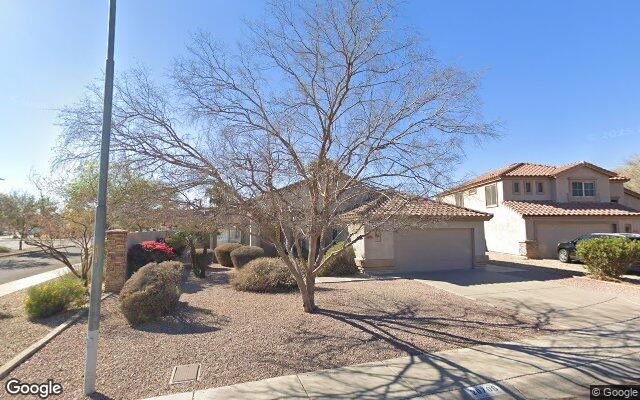
A medium home, reviewed on public record.
© Google Street View
Compared to 1,661 Arizona facilities with a similar number of beds.
Care · 36-month window. Higher percentile = better performance on inspection record. Source: Arizona Dept. of Health Services · Bureau of Residential Facilities Licensing.
among peers to rank.
on file.
Rankings based on 36-month ADHS inspection data. Severity and frequency: fewer citations = higher percentile. Repeat rate: lower repeat citation share = higher percentile.
Citation history, plotted month by month.
10 deficiencies on record. Each bar is a month with a citation.
Finding distribution
10 total · 36 monthsScope × Severity (CMS A–L)
Every inspection visit, verbatim.
5 inspections in the public record, most recent first. Plain-language summaries open first — click into any row for the full citation text.
2025-11-03Complaint InvestigationR9-10-806 · 4 findings
“Based on observation, interview, and record review, the manager failed to ensure a caregiver provided documentation of completing a caregiver training program approved by the Department or the Board of Examiners for Nursing Care Institution Administrators and Assisted Living Facility Managers (NCIA Board). The Department was provided with false and misleading information. Findings include: 1. The Compliance Officer observed E3 providing assistance to residents. 2. A record review of E3 personnel record revealed a caregiver certificate from 2011 and a ALTP that was not able to be verified. 3. In an interview, E2 reported that E3 had been a caregiver at other facilities and working a long time.”
“Based on record review and interview, the manager failed to ensure that a resident had a service plan that was reviewed and updated at least once every three months for a resident receiving directed care services. Findings include: 1. A record review of R1 medical records revealed that they required Directed Care services. Further review revealed R1's service plan had not been updated in the last 8 months. 2. In an interview, E2 acknowledged that the service plan had not been updated every three months for a resident receiving directed care services.”
“Based on observation and interview, the manager failed to ensure the premises of the facility were free from a condition or situation that may cause a resident or other individual to suffer physical injury. Findings include: 1. When walking into the facility, the Compliance Officer observed a TV on top of a couch that was leaning against a wall. 2. During an environmental inspection of the backyard, the Compliance Officer observed a broken picture frame with glass shards. 3. During an environmental inspection of a resident's room, the Compliance Officer observed the resident's room filled with personal items, boxes on the floor, the bed was covered with items, trash, and a wheelchair with items on top. 4. In an interview, E2 acknowledged that the premises and equipment used at the assisted living facility were not free from a condition or situation that may cause a resident or other individual to suffer physical injury.”
“Based on observation and interview, the manager failed to ensure garbage and refuse were stored in covered containers. Findings include: 1. During an environmental inspection of a resident's room, the Compliance Officer observed the resident's room filled with personal items, boxes on the floor, the bed was covered with items, trash, and a wheelchair with items on top. There was also a garbage container with no lid. 2. In an interview with E2, the findings were reviewed, and no additional information was provided.”
2025-03-01Complaint InvestigationNo findings
2025-01-14Complaint InvestigationA.A.C. · 4 findings
“Based on documentation review, record review, and interview, the manager failed to ensure a personnel record for each employee or volunteer included documentation of evidence of freedom from infectious tuberculosis (TB) on or before the date the individual began providing services at or on behalf of the assisted living facility, and as specified in R9-10-113, for one of two personnel sampled. The deficient practice posed a potential TB exposure risk to residents. Findings include: 1. R9-10-113.A states "If a health care institution is subject to the requirements of this Section, as specified in an Article in this Chapter, the health care institution's chief administrative officer shall ensure that the health care institution establishes, documents, and implements tuberculosis infection control activities that...2. Include: a. For each individual who is employed by the health care institution, provides volunteer services for the health care institution, or is admitted to the health care institution and who is subject to the requirements of this Section, screening, on or before the date specified in the applicable Article of this Chapter, that consists of: i. Assessing risks of prior exposure to infectious tuberculosis, ii. Determining if the individual has signs or symptoms of tuberculosis, and iii. Obtaining documentation of the individual's freedom from infectious tuberculosis according to subsection (B)(1)..." 2. A review of the Centers for Disease Control and Prevention website revealed a web page titled, "Guidelines for Preventing the Transmission of Mycobacterium tuberculosis in Health-Care Settings, 2005." The web page stated, "If TST (Mantoux Skin Test) is used for baseline testing, two-step testing is recommended for HCWs (Health Care Workers) whose initial TST results are negative. If the first-step TST result is negative, the second-step TST should be administered 1-3 weeks after the first TST result was read." 3. A review of E2's personnel record did not reveal documentation of freedom from infectious TB by way of two-step TB testing. 4. In an interview, E1 acknowledged E2's personnel records did not contain evidence of freedom from infectious tuberculosis by way of two-step skin tests or one blood test on or before the date E2 provided services at or on behalf of the assisted living facility as specified in R9-10-113.”
“Based on record review and interview, the manager failed to ensure before or at the time of acceptance of an individual, the individual submitted documentation dated within 90 calendar days before the individual was accepted by the assisted living facility and signed by a physician, registered nurse practitioner, registered nurse, or physician assistant to include whether the individual required continuous medical services, continuous or intermittent nursing services, or restraints, for two of two sampled residents. The deficient practice posed a risk if the facility was unable to meet a resident's needs. Findings include: 1. A review of R1's medical record revealed documentation indicating whether residents required continuous medical services, continuous or intermittent nursing services, or restraints, dated and signed by a physician, registered nurse practitioner, registered nurse, or physician assistant; however, the document was dated after R1's date of acceptance. 2. A review of R2's medical record revealed documentation indicating whether residents required continuous medical services, continuous or intermittent nursing services, or restraints, dated and signed by a physician, registered nurse practitioner, registered nurse, or physician assistant; however, the document was dated after R2's date of acceptance. 3. In an interview, E1 acknowledged that a manager failed to ensure documentation dated within 90 calendar days before R1 and R2 were accepted by the assisted living facility was submitted.”
“Based on record review and interview, the manager failed to ensure a resident had a written service plan completed no later than 14 calendar days after the resident's date of acceptance, for one of two residents sampled. The deficient practice posed a risk as there was no service plan to direct services to be provided to a resident. Findings include: 1. A review of R1's medical record revealed no service plan was completed within 14 calendar days after R1's acceptance. 2. In an interview, E1 reported that E1 was unaware that a service plan for R1 had to be conducted within 14 days of acceptance and thought that the service plan from R1's previous facility (not associated with the current facility) would suffice. 3. In an interview, E1 acknowledged a completed service plan within 14 calendar days of R1's date of acceptance was not available for review.”
“Based on documentation review, record review, and interview, the manager failed to ensure a written service plan included the correct level of service the resident received for one of two residents reviewed. The deficient practice posed a risk as the service plan did not reinforce and clarify services to be provided to a resident. Findings include: 1. A.R.S. \'a7 36-401.16, "Directed care services" means programs and services, including supervisory and personal care services, that are provided to persons who are incapable of recognizing danger, summoning assistance, expressing need or making basic care decisions. 2. A.R.S. \'a7 36-401.41 defines "Personal care services" to mean assistance with activities of daily living that can be performed by persons without professional skills or professional training and includes the coordination or provision of intermittent nursing services and the administration of medications and treatments by a nurse who is licensed pursuant to title 32, chapter 15 or as otherwise provided by law. 3. A review of R1's medical record revealed a written service plan for personal care services dated October 24, 2024; however, legal documentation from Maricopa County Courts dated June 13, 2023 revealed R1's need for directed care services per A.R.S. \'a7 36-401.16. 4. In an interview, E1 acknowledged R1's service plan did not include the correct level of service.”
2024-04-22Complaint InvestigationA.A.C. · 2 findings
“Based on observation, record review and interview, the manager failed to ensure at least the manager or a caregiver was present at an assisted living home when a resident was present in the assisted living home. The deficient practice posed a risk as no qualified employee was present to meet a resident's needs. Findings include: 1. The Compliance Officer observed E3 working by themselves at the facility when the Compliance Officer arrived at approximately 9:45 AM. 2. A review of E3's personnel record revealed E3 was hired as an assistant caregiver. 3. In an interview, E2 reported they were at the facility on the morning of the inspection, but had taken a resident out to a nearby park for some fresh air. 4. In an interview, E1 acknowledged a manager or a caregiver was not present at the assisted living home when the Compliance Officer arrived and residents were in the home.”
“Based on documentation review, observation, and interview, the manager failed to ensure the means of exiting the facility for a resident who does not have a key, special knowledge for egress, or the ability to expend increased physical effort, controlled or alerted employees of the egress of a resident from the facility to the outside area allowing the resident to be at least 30 feet away from the facility. The deficient practice posed a risk if staff were unaware of the egress of a resident from the facility. Findings include: 1. A review of Department documentation revealed the facility was authorized to provide directed care services. 2. During the environmental inspection of the facility, the Compliance Officer observed the door leading to the back yard had an alert. However, the alert was turned off at the time of observation. 3. During the environmental inspection of the facility, the Compliance Officer observed the front door of the facility had a control and alert. However, both the control and the alert were deactivated at the time of observation. 4. In an interview, E1 and E2 reported the alert on the door leading to the back yard was turned off by a contractor who frequently went to the back yard to retrieve tools from the shed. E1 and E2 reported the front door was unlocked and the alert was off because another agency required it to remain unlocked when certain residents left the facility until they returned, and the alert was deactivated to prevent constant noise. 5. In an interview, E1 acknowledged means of exiting the facility for a resident who does not have a key, special knowledge for egress, or the ability to expend increased physical effort, controlled or alerted employees of the egress of a resident from the facility to the outside area allowing the resident to be at least 30 feet away from the facility.”
2024-01-31Complaint InvestigationNo findings
Other facilities in Glendale.
Other memory care facilities near Glendale with similar care offerings.
Contract Decoder
Family reviews
No reviews yet — be the first to share your experience